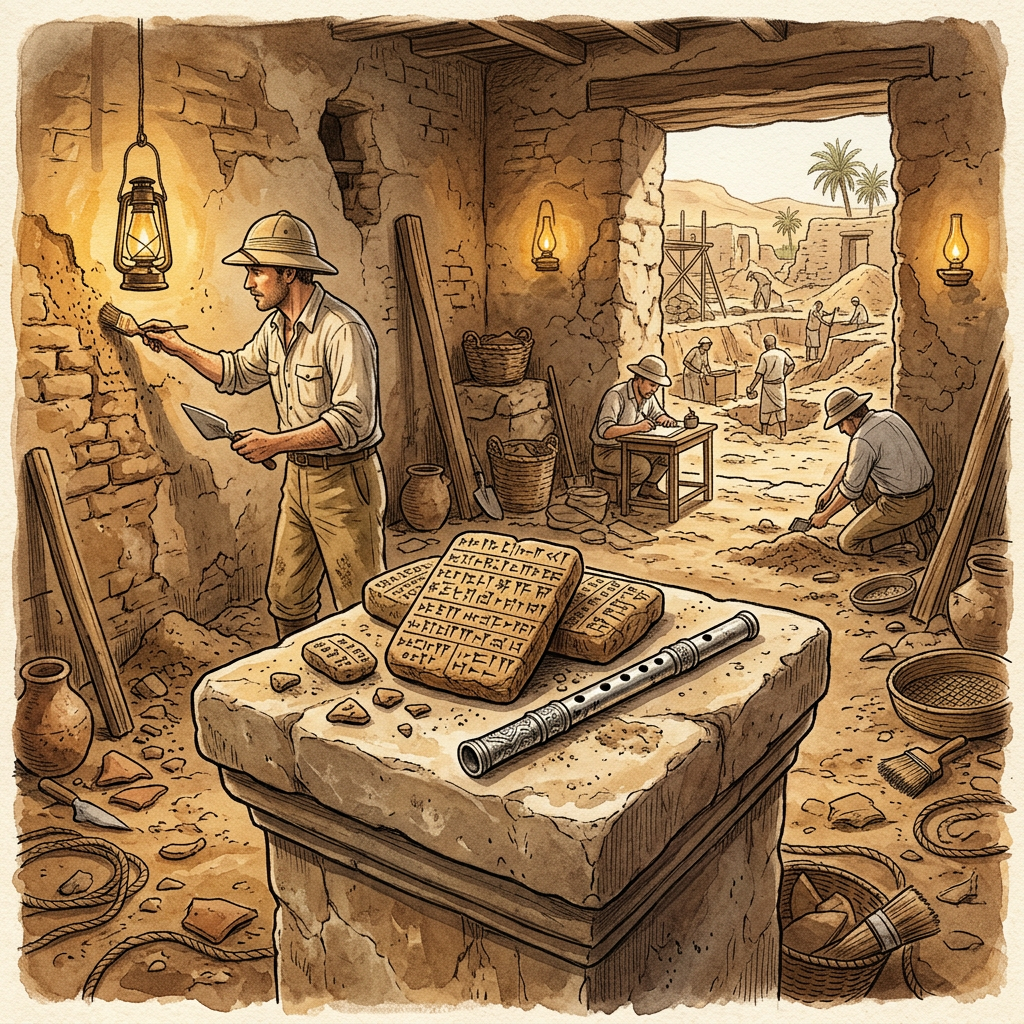
Excavations in the ancient Sumerian city of Larsa have revealed a sprawling 4,000-year-old complex identified as a musical conservatory. The site yielded dozens of cuneiform tablets containing musical notation and instructions for the tuning of harps and lyres, as well as a dedicated practice hall with acoustic-enhancing wall alcoves designed to project sound.
Archaeologists believe this discovery is the earliest known evidence of a formal institution dedicated to music education. Among the artifacts was a fragmentary silver flute and a series of 'practice tablets' where students had transcribed melodic sequences, providing a rare glimpse into the auditory landscape of Ancient Mesopotamia and the professionalization of court musicians.