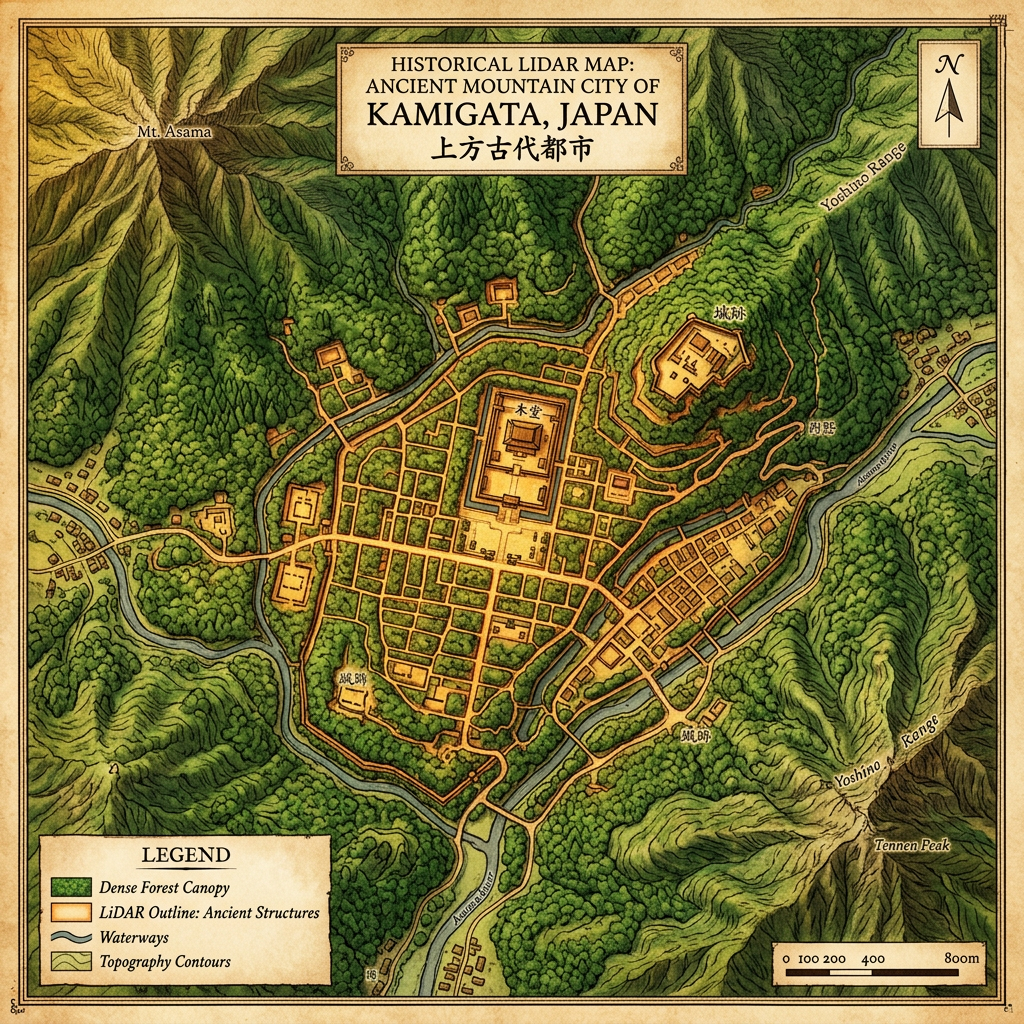
Using advanced LiDAR technology, researchers have identified a lost 1,200-year-old urban center in Japan’s Tohoku region. The site, hidden for centuries beneath dense mountain forests, shows evidence of a massive silk-production hub, including organized irrigation channels for mulberry trees and the remains of specialized weaving workshops.
This discovery provides evidence of a thriving, high-altitude economy during the Heian period that was previously unknown to historians. Excavations at the site have already uncovered carbonized silk cocoons and bronze loom weights, indicating that the region played a pivotal role in the North Pacific silk trade long before the modern era, connecting remote northern clans to the Imperial court.