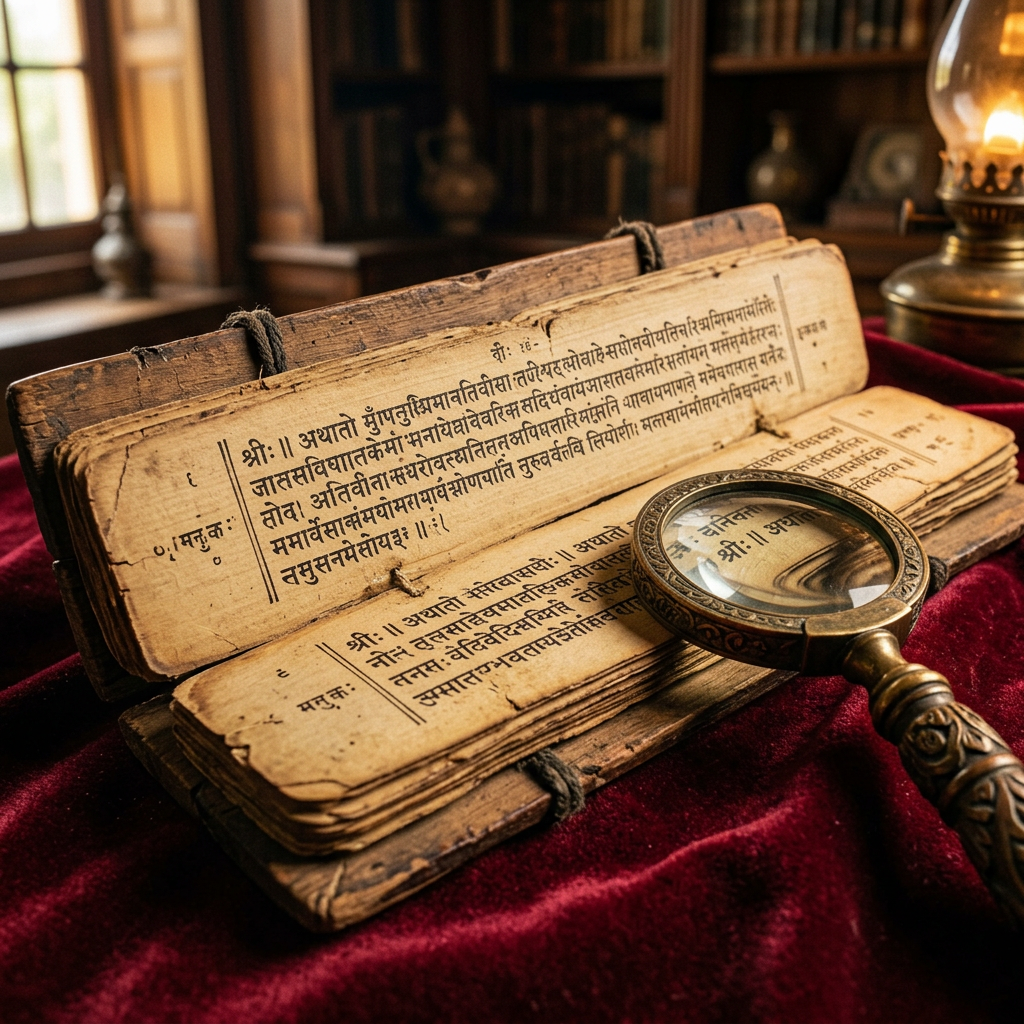
Archaeologists and scholars in Bihar have announced the discovery of a remarkably well-preserved palm-leaf manuscript titled 'Pratyaksha-Naya' within a private ancestral collection in a village near Darbhanga. The text, dated to the mid-10th century, provides an exhaustive treatment of the Nyaya school's theories on sensory perception, specifically focusing on the mechanics of how the mind interfaces with external objects to produce 'valid' knowledge. Unlike previously known versions of Mithila logic, this manuscript introduces a unique sub-category of 'reflexive perception' that suggests early Indian logicians were investigating the role of the subconscious in filtering sensory data.
The discovery is being hailed as a major breakthrough in understanding the development of medieval Indian epistemology. Dr. Arindam Jha, lead researcher on the project, noted that the text contains annotations from three different centuries, suggesting it was used as a primary teaching tool for generations of logic scholars. The manuscript also clarifies the 'Anumana' (inference) relationship in cases where direct perception is obscured, offering a more nuanced view of the 'Logic of Doubt' than was previously attributed to this period.