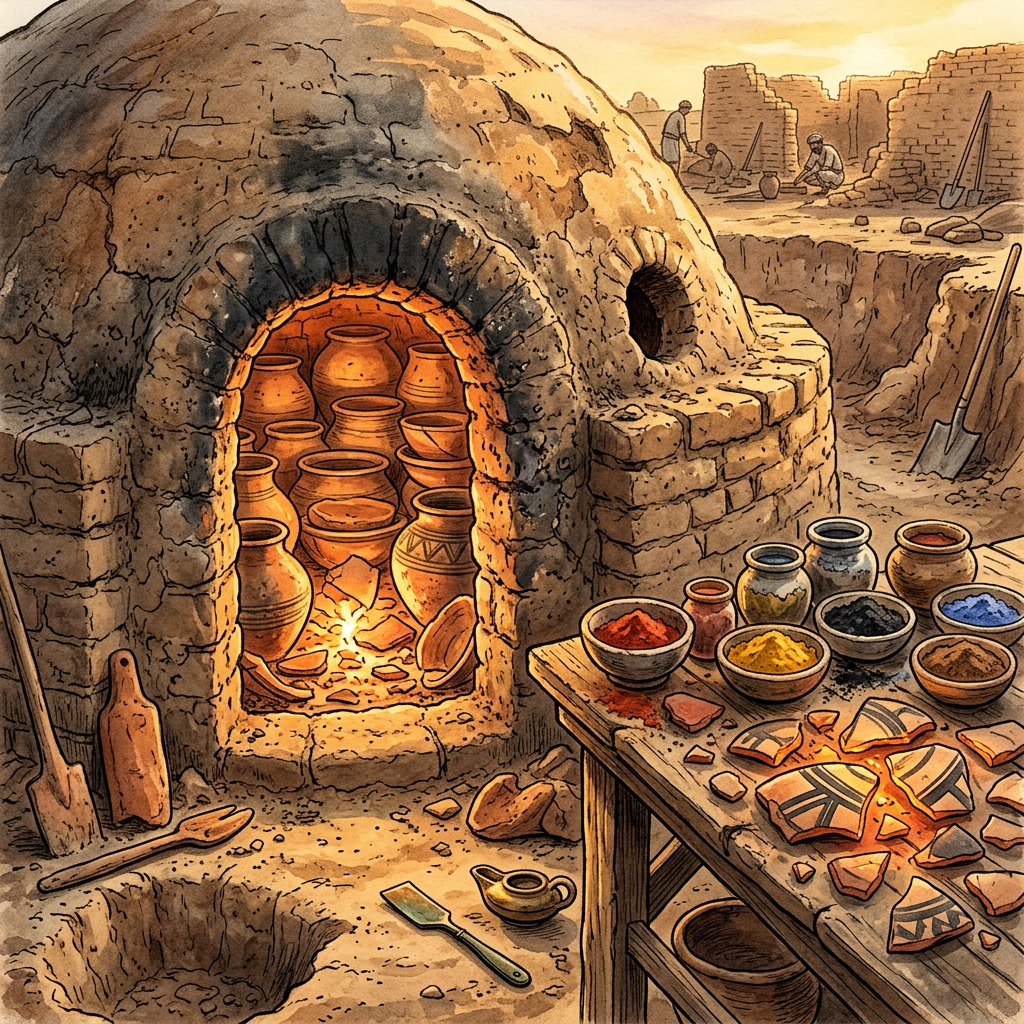
Recent excavations at a newly identified Indus Valley site in the Majha region of Punjab have yielded the remains of a 4,500-year-old 'Ceramic Glazing Studio'. Archaeologists discovered a series of specialized muffle kilns, designed to protect delicate pottery from direct flame, alongside containers of mineral-based pigments used for creating high-gloss finishes. This find provides the first direct evidence of industrial-scale glazing techniques in the mature Harappan period.
The excavation team also recovered a collection of stamped terracotta shards that appear to be trial pieces for experimenting with different chemical compositions of glaze. Analysis suggests the use of cobalt and copper-based minerals, indicating a sophisticated understanding of high-temperature chemistry. This discovery expands our knowledge of the Indus Valley’s aesthetic and industrial capabilities beyond standard brick and bead production.