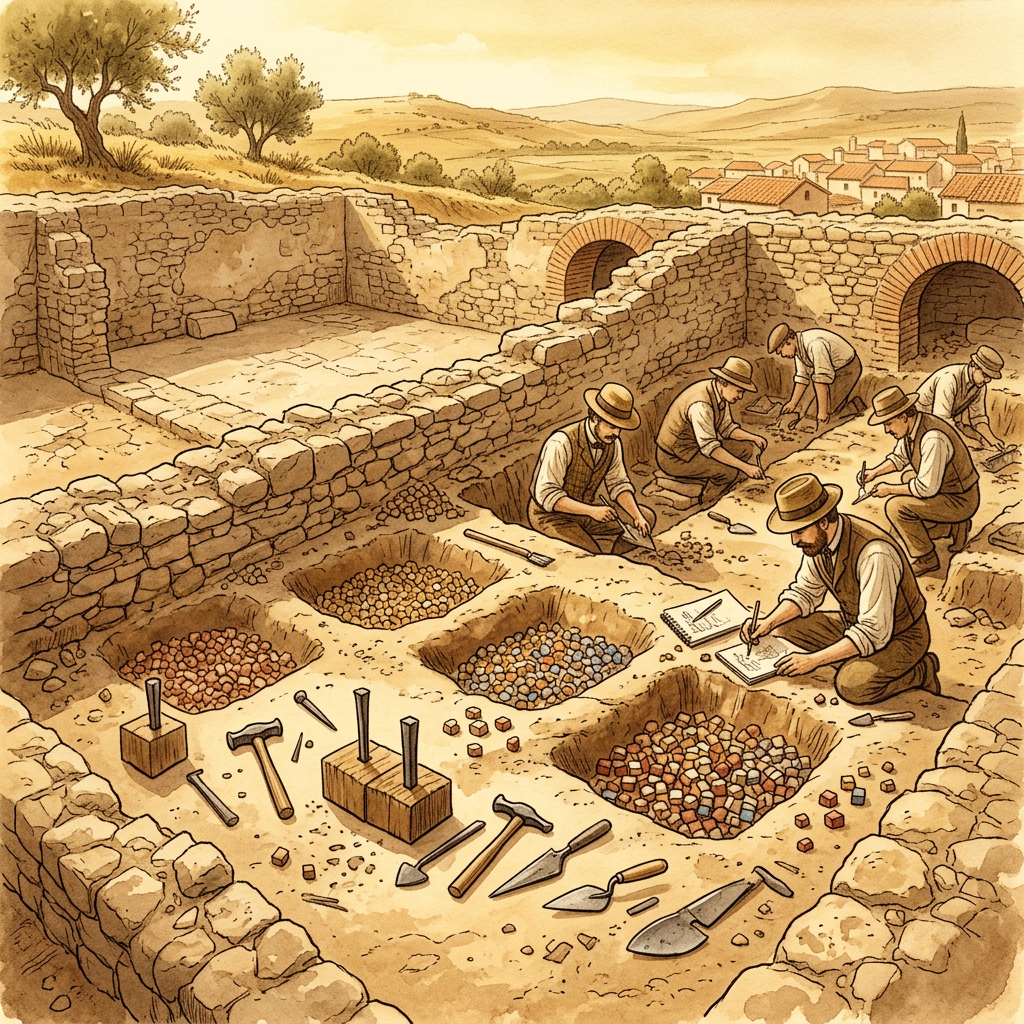
A team of researchers at the Archaeological Site of Italica in Spain has unearthed the headquarters of a 2nd-century Roman 'Guild of Mosaicists'. The building contains a large central hall with a recessed floor pit used for mixing lime mortar and sorting stone tesserae by color. Most significantly, archaeologists discovered a cache of lead tablets inscribed with geometric patterns, serving as the first physical 'manuals' for designing complex mosaic floors found in the Roman Empire.
The site also yielded a collection of specialized iron nippers and stone-cutting hammers, alongside samples of imported marble from across the Mediterranean. The presence of a dedicated shrine to Minerva within the guildhall suggests the spiritual and social importance of the craft. This discovery provides unprecedented insight into the professional organization and standardized artistic practices of the Roman construction industry.