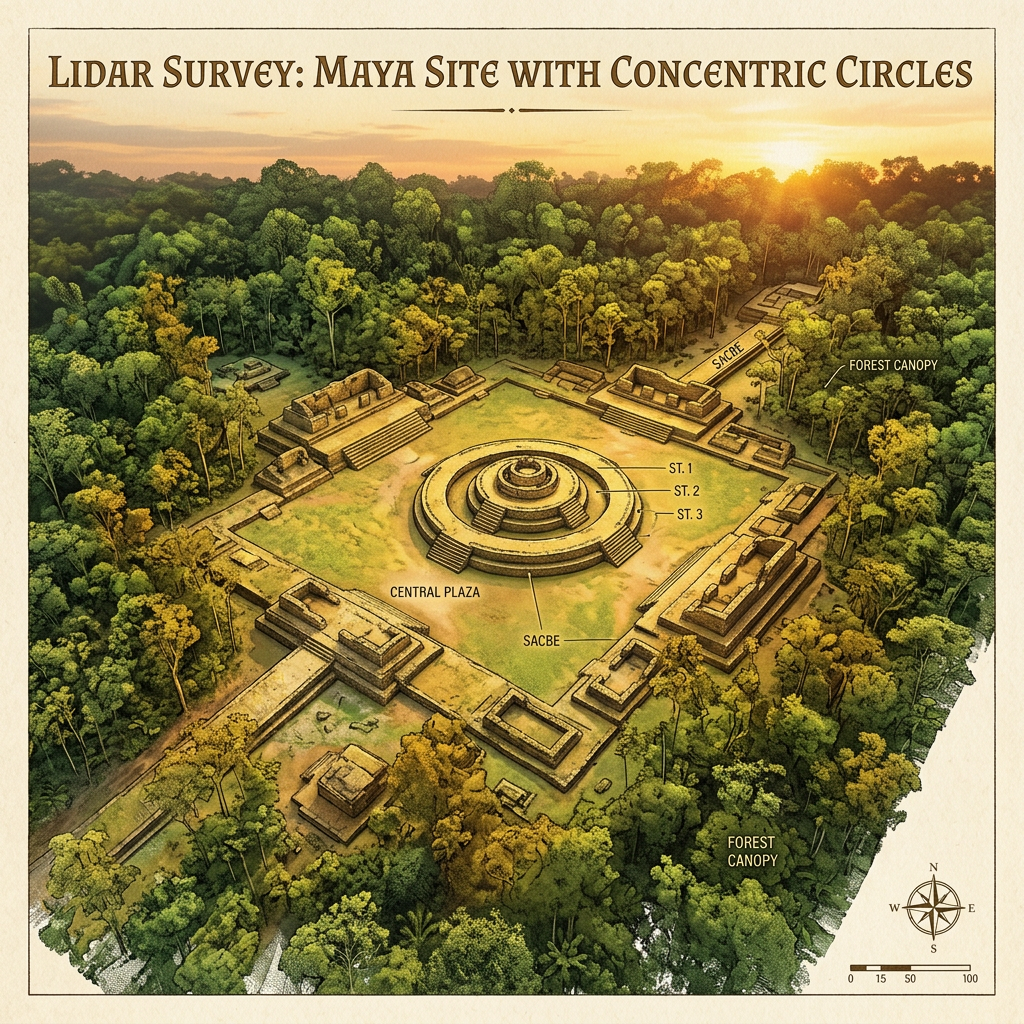
New LiDAR surveys over the dense jungles of the Petén Basin in Guatemala have revealed a previously unknown 8th-century complex described as an 'Astronomical Computing Center'. The site consists of a series of massive concentric stone rings and platforms aligned with the rising of various planets, notably Venus and Mars. AI analysis of the terrain suggests these structures were used to perform complex calendrical calculations necessary for coordinating agricultural cycles and ritual events across the Mayan lowlands.
The central plaza of the complex features a tall masonry pillar that acted as a gnomon, casting shadows onto carved stone markers to track the progress of the solar year. Nearby residential sectors show evidence of housing for high-ranking scribes and mathematicians, with numerous obsidian-tipped styluses found in the debris. This discovery redefines our understanding of the scale and institutional nature of Maya scientific endeavors during the Late Classic period.