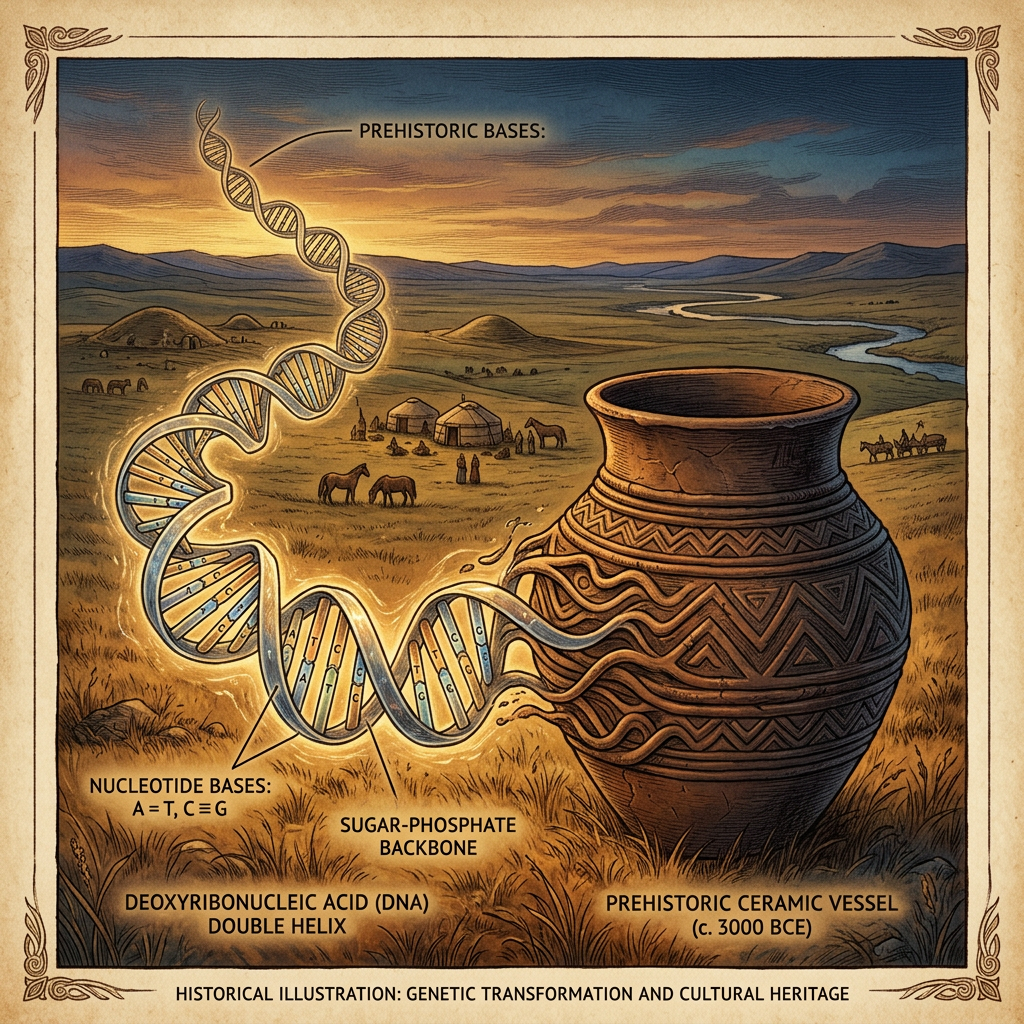
Researchers in the field of paleogenomics have published a landmark study in Nature Paleogenomics analyzing the DNA of 9,000-year-old skeletal remains found in the Caspian-Steppe region. The study identifies a specific genetic mutation—the CS-2026-L variant—which provided early hunter-gatherers with the ability to digest fermented camel milk. This finding pushes back the known timeline for human adaptation to non-bovine dairy consumption by nearly two millennia and suggests that camel management occurred earlier than previously estimated.
The study utilizes a new technique called Proteo-Genomic Integration, which allows scientists to match genetic markers with protein residues found in ancient ceramic vessels at the same site. The presence of specific lactase-persistent alleles in a population that predates the Neolithic transition in the region challenges the traditional 'milk follows cattle' model of human evolution. Instead, it indicates a highly specialized adaptation to the unique dietary resources of the arid steppe environment, demonstrating the rapid pace of human genetic selection in response to nomadic lifestyles.