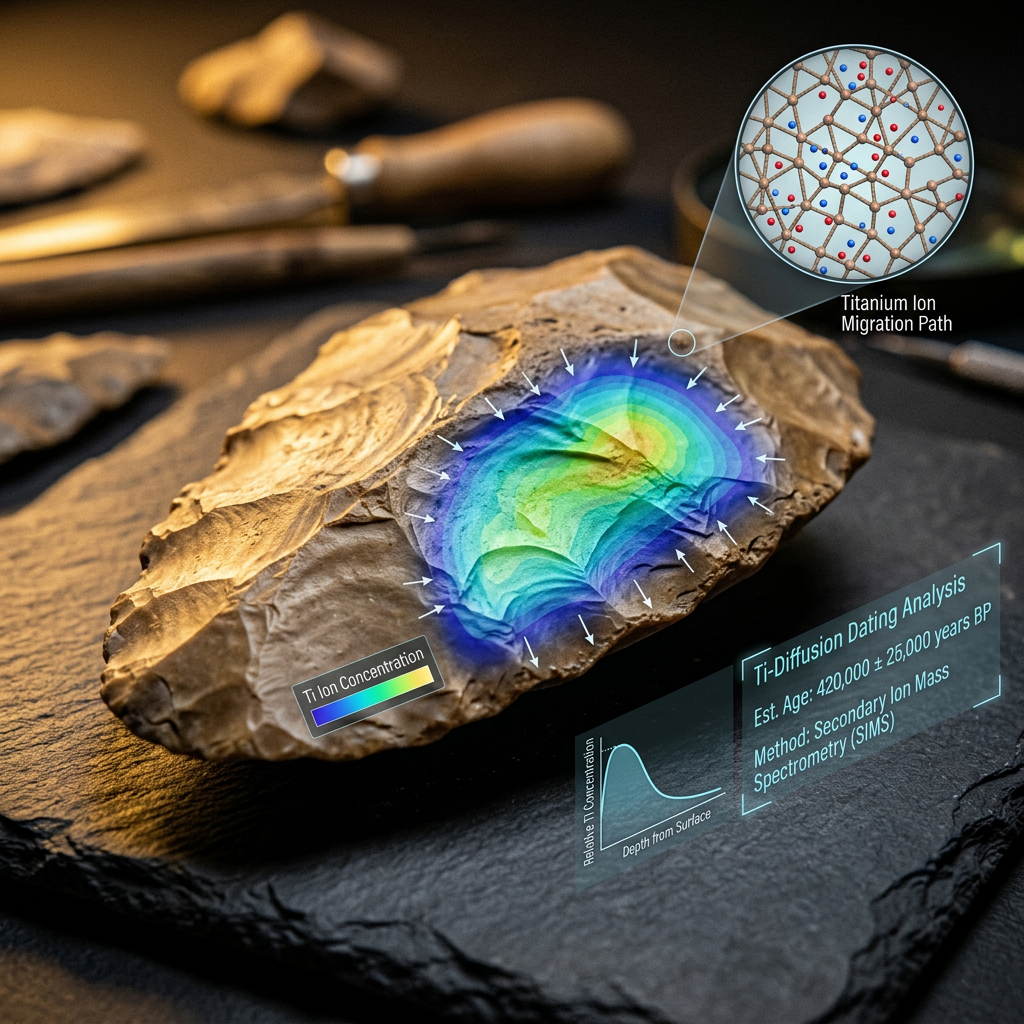
A new research paper published in Archaeological Dating Monthly introduces a revolutionary dating methodology known as Titanium-Diffusion Chronometry. By measuring the migration of titanium ions across the surface of quartzite stone tools, researchers have refined the chronology of Paleolithic toolkits in the Soan Valley of northern Pakistan. The study places a significant assemblage of Acheulean handaxes and cleavers at approximately 220,000 years ago, providing much tighter constraints than traditional thermoluminescence methods.
This new dating technique is particularly significant because it allows for the high-precision dating of lithic materials that are often found in secondary geological contexts where organic matter is absent. The data suggests a period of intense human activity and technological stability in the region during the Middle Pleistocene. The researchers argue that this methodology could be applied globally to resolve long-standing disputes regarding the timing of early human dispersals across the Asian continent.