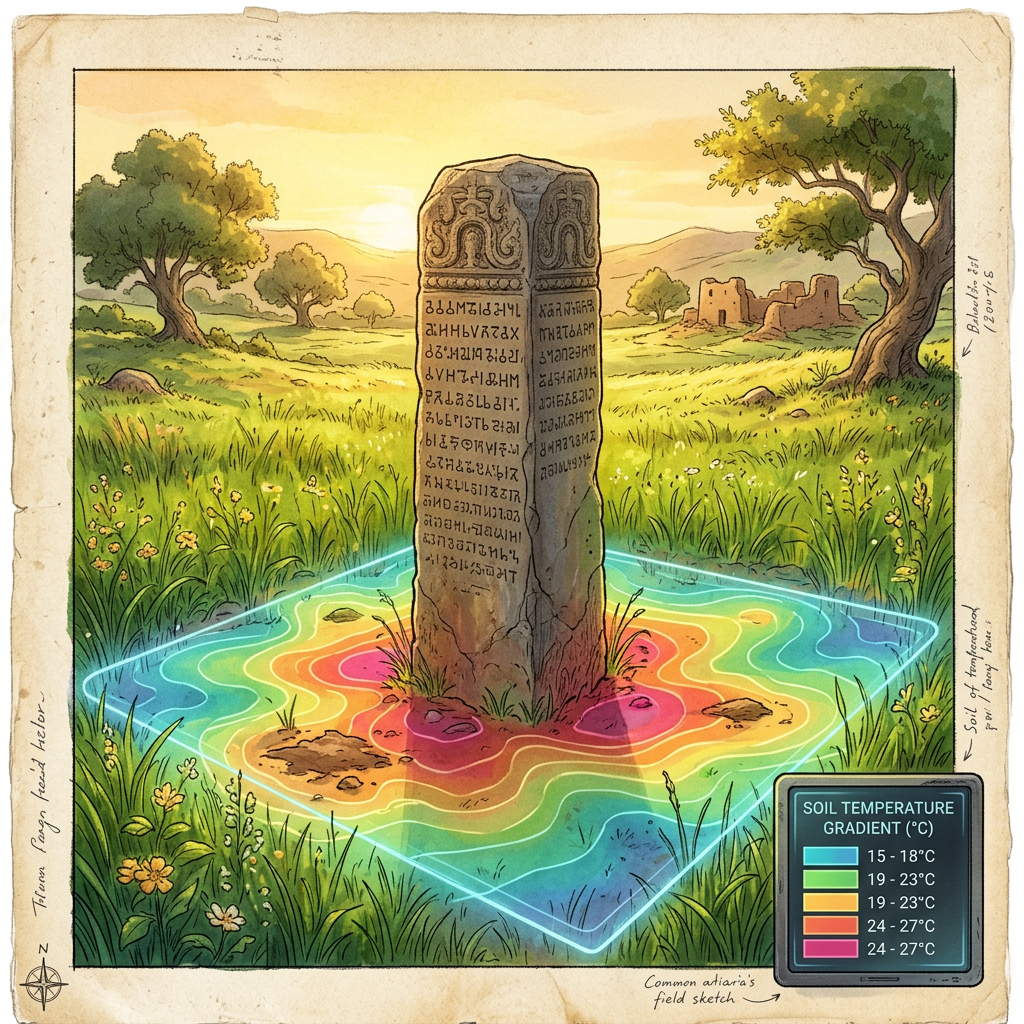
Archaeologists and soil scientists in Tamil Nadu have announced the decipherment of a series of 7th-century Brahmi-Sanskrit inscriptions found at an agricultural site in the Vaigai Valley. The inscriptions detail a set of complex algorithms used by ancient farmers to calculate soil-thermal conductivity, a critical metric for determining the optimal planting depth of different cereal crops based on seasonal heat retention.
The study, published in The Journal of Heritage Science, suggests that these early agriculturalists used a standardized scale of measurement to record soil temperature fluctuations across different lunar phases. This breakthrough indicates that ancient Indian agronomy, as documented in local variations of the Krishi-Parashara, was based on empirical thermodynamic observations rather than purely ritualistic traditions.