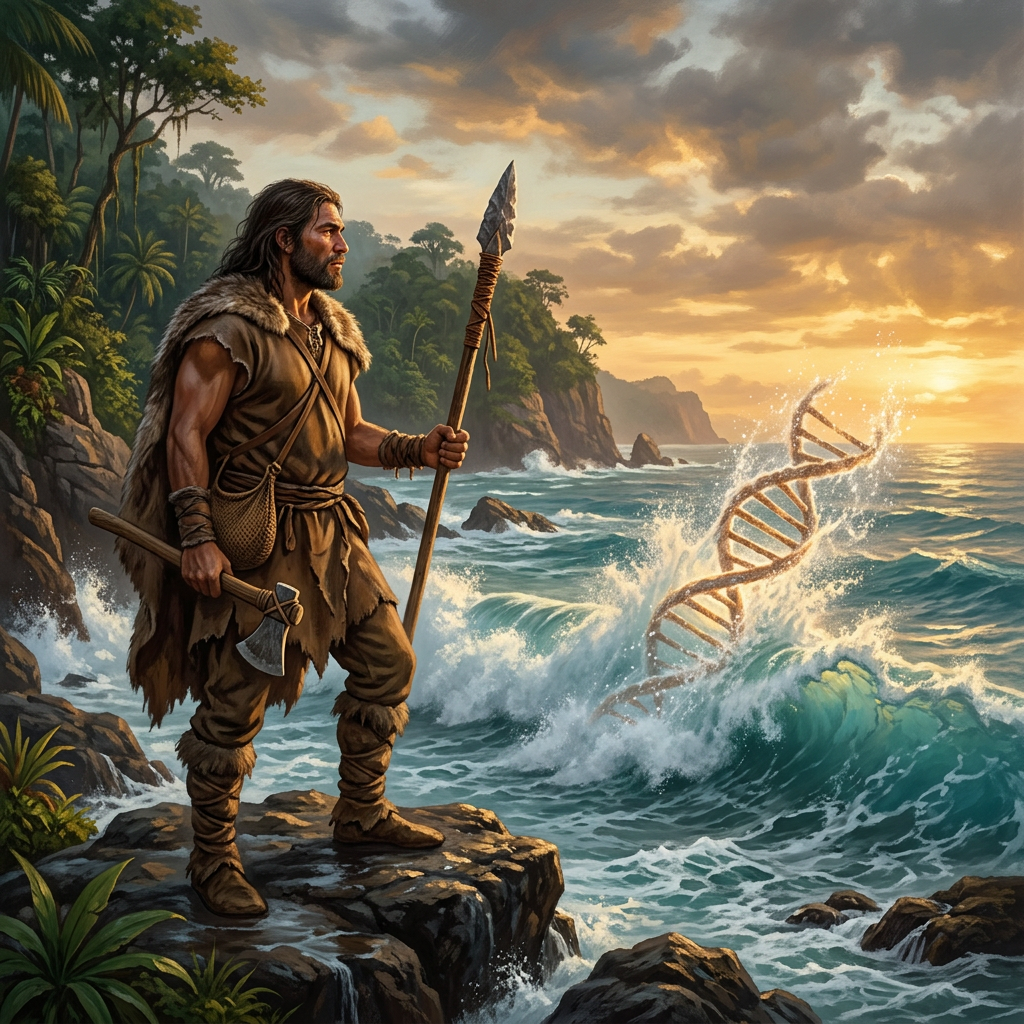
New paleogenomic research published in Cell Reports has sequenced the DNA of 11,000-year-old human remains found in submerged coastal caves of the former Sundaland landmass. The study identifies a specific cluster of genetic variants in the SLC4 family of genes, which are associated with high-efficiency renal processing of salt, suggesting that these early maritime foragers had undergone significant evolutionary adaptation to a diet primarily composed of marine protein and high-salinity flora.
Led by geneticists from the Global Paleogenomics Consortium, the study provides a vital link in understanding how post-glacial sea-level rises forced human populations to adapt to radical environmental shifts. This find represents the earliest known evidence of genetic selection for specialized marine metabolism in Southeast Asian populations.