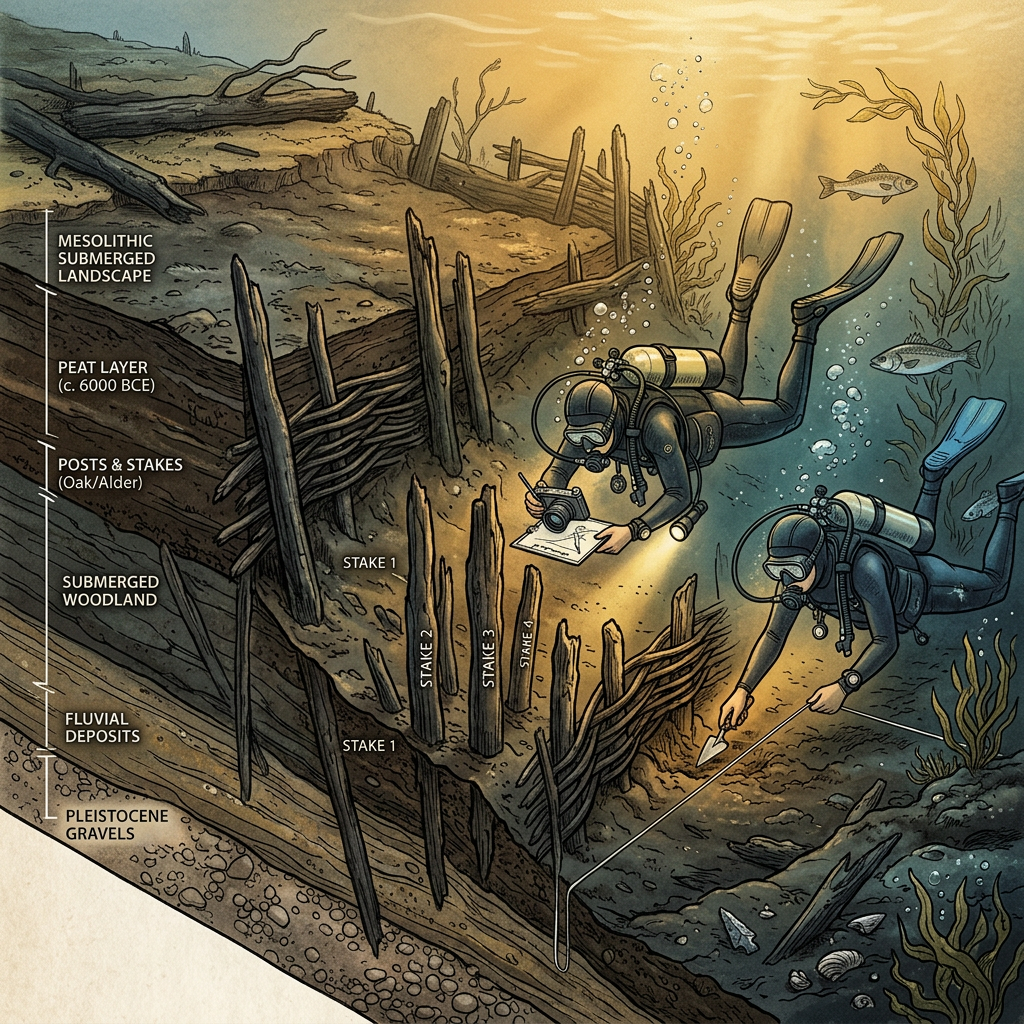
Underwater excavations off the coast of Denmark have revealed a series of Mesolithic peat-terraces that provide a rare glimpse into how prehistoric hunter-gatherers adapted to rapid post-glacial sea-level rise. Archaeologists discovered that around 7,000 BCE, local communities constructed elaborate retaining structures made of hazel branches and stone to protect their coastal settlements from the encroaching North Sea. These findings offer the earliest known evidence of systematic coastal engineering in response to environmental change.
The preservation of organic materials, including woven fish traps and wooden tools within the peat layers, allows researchers to reconstruct the environmental history of the region with unprecedented detail. Scientists believe these ancient strategies of "managed retreat" and localized defense could offer valuable lessons for modern coastal communities facing similar threats. The project, funded by the EU Climate Heritage Fund, aims to map more of these submerged landscapes before they are lost to further seabed erosion.