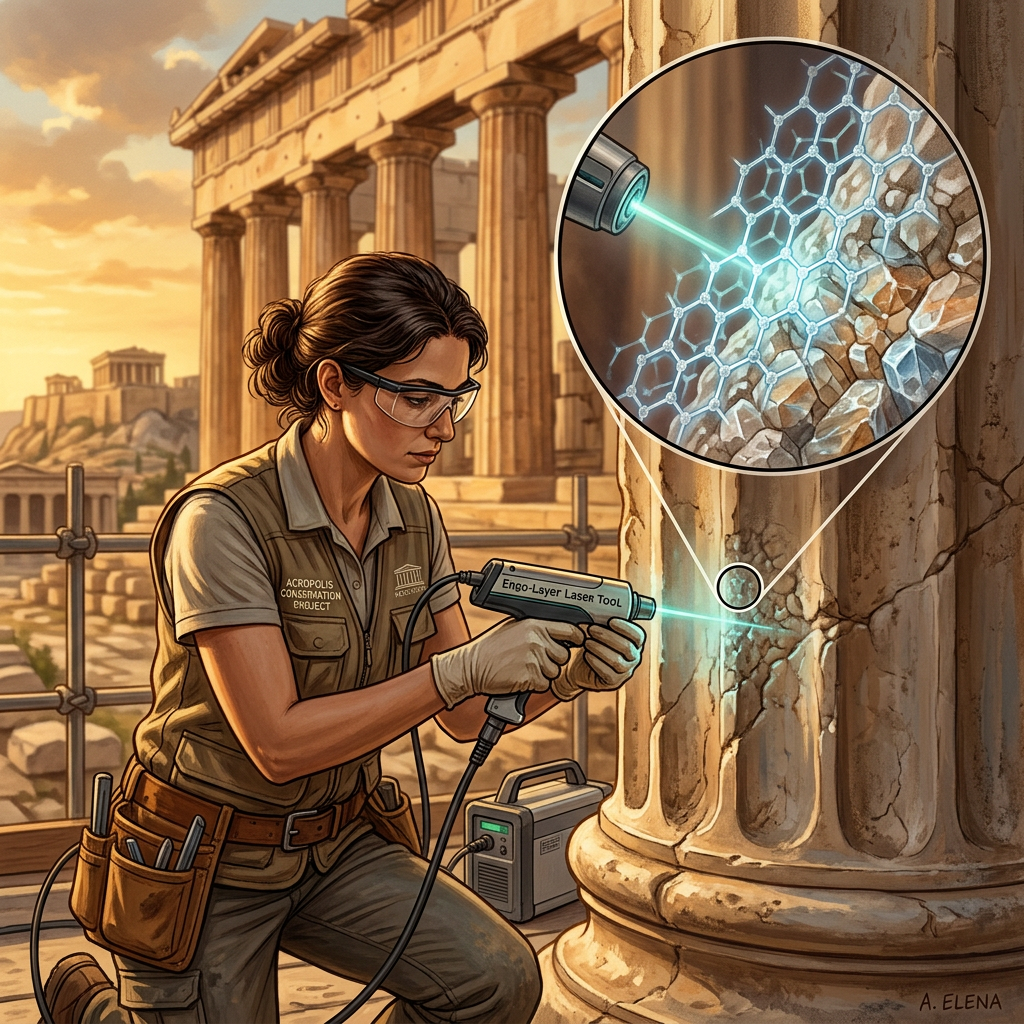
Scientists at the National Technical University of Athens have successfully deployed an innovative 'Nano-Diamond' coating to protect the marble surfaces of the Parthenon. This transparent, one-atom-thick layer is designed to be chemically inert and highly durable, shielding the 2,500-year-old stone from the corrosive effects of urban sulfur dioxide and acid rain without altering the marble's natural appearance or "breathability." The technology uses a laser-deposition process that allows the coating to bond at the molecular level with the calcite crystals.
Initial tests on the western frieze show a 95% reduction in surface degradation compared to untreated areas. This heritage preservation technology is being hailed as a major breakthrough for the maintenance of outdoor monuments in polluted metropolitan environments. Unlike traditional resins, the nano-diamond layer does not yellow or peel over time, offering a permanent solution to one of the most persistent threats to Mediterranean heritage sites. The project is now being considered for expansion to other UNESCO sites across Southern Europe.