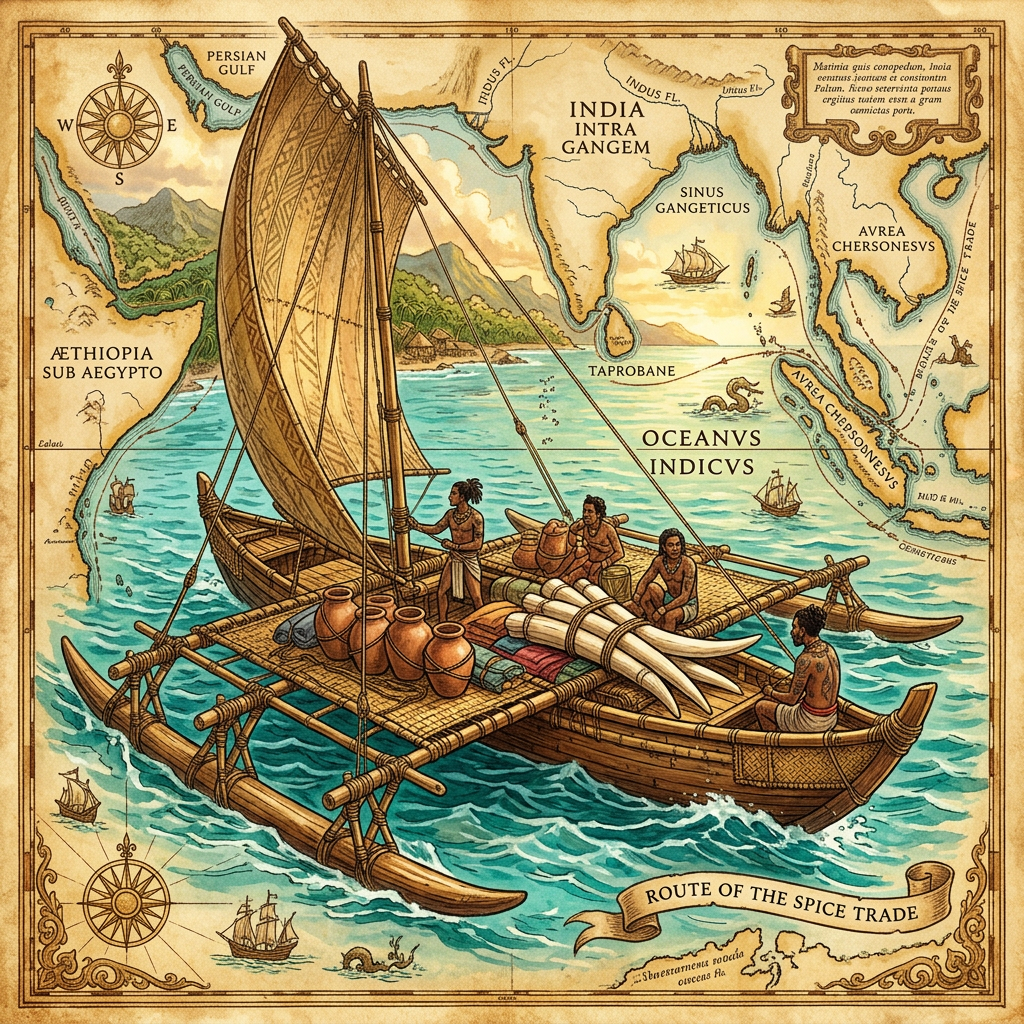
A transnational team of maritime archaeologists has uncovered definitive evidence of the 'Ivory and Incense' Seaway, a previously unknown maritime trade route connecting the island of Java to the Red Sea as early as 1,000 BCE. By analyzing the chemical signatures of resins and ivory fragments found in submerged coastal caches, the team demonstrated that ancient Southeast Asian seafaring technology was far more advanced than previously recorded, enabling direct open-ocean crossings long before the established Silk Road era.
The study, published in the Journal of Maritime Archaeology, suggests that this route was driven by a high demand for exotic aromatics and luxury materials in the courts of ancient Egypt and the Levant. This discovery reshapes our understanding of early globalization, proving that the Indian Ocean was a bustling corridor of cultural and economic exchange nearly a millennium earlier than the Roman-era spice trade. The team utilized deep-sea submersibles to map the currents and potential navigational waypoints used by these prehistoric mariners.