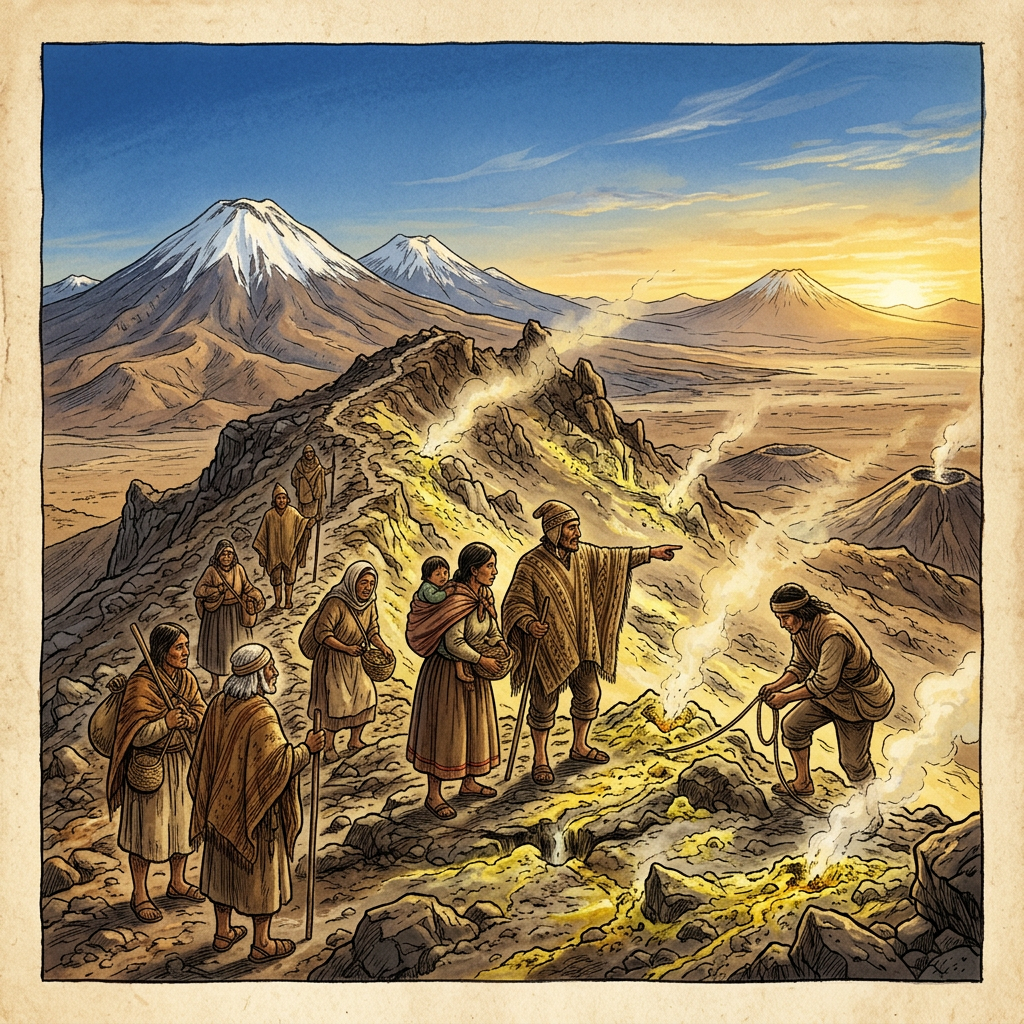
A paleogenetic study of remains from the Atacama Altiplano has uncovered the first evidence of human genetic adaptation to volcanic sulfur toxicity. The research, published in Genome Research, analyzed 8,500-year-old individuals living in close proximity to active volcanic vents, identifying a selection sweep in the SULF1 gene cluster.
The scientists found that these populations developed specialized respiratory and metabolic pathways to process high levels of atmospheric sulfur dioxide, a feat of rapid localized evolution. This study is the first to document a human population evolving specifically to survive in the unique chemical environment of volcanic highlands, providing new insights into the plasticity of the human genome in extreme landscapes.