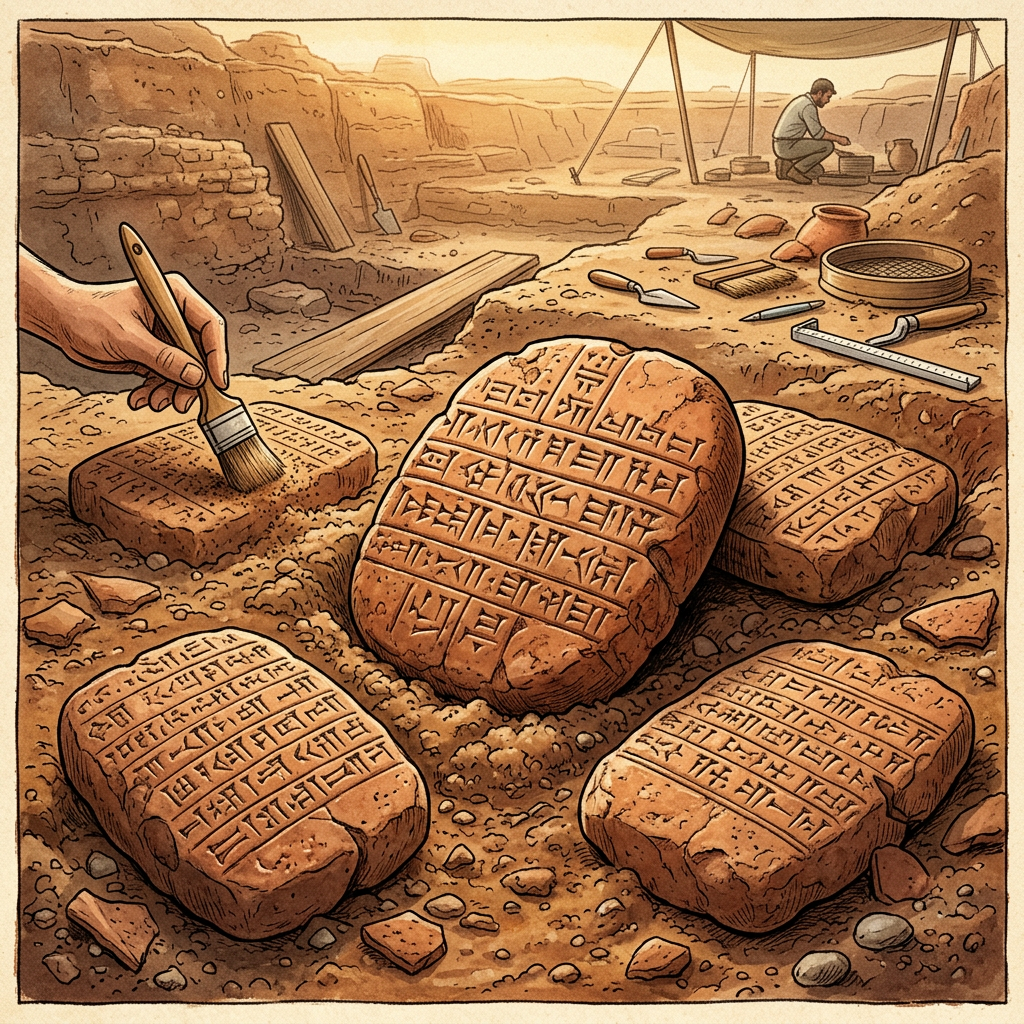
Excavations at a prehistoric site in the Narmada Valley have turned up a cache of terracotta tablets from the 6th century CE. The tablets contain excerpts from a lost school of thought known as 'Drishti-Srishti', which posits that the material universe is a projection of the observer's internal state. This discovery pushes back the formal documentation of subjective idealism in India by several centuries.
The text uses the metaphor of the 'Infinite Mirror' to explain how the human mind creates the perception of time and space. According to the lead archaeologist, these tablets prove that early Indian philosophers were engaged in sophisticated debates regarding the nature of reality and consciousness long before the consolidation of later Advaitic thought.