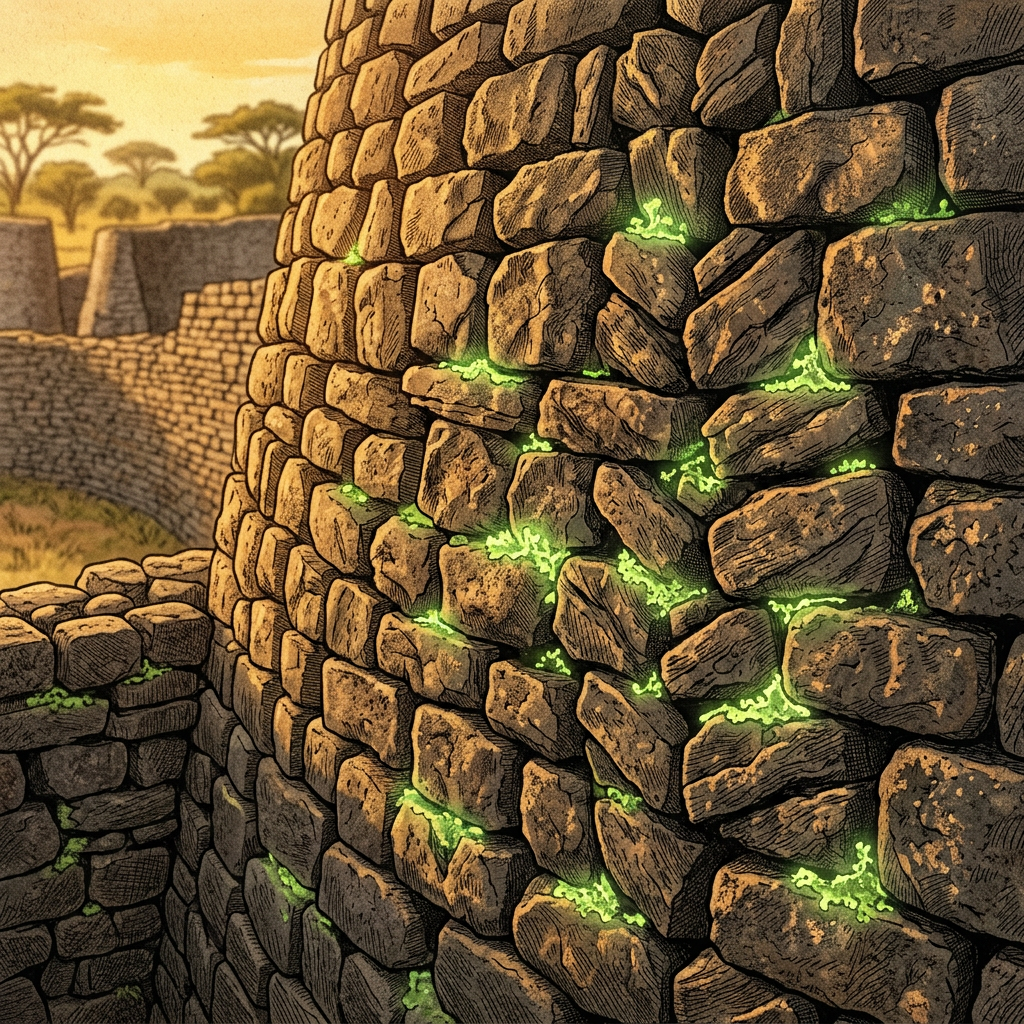
Innovative heritage preservation technology has taken a biological turn with Project Archi-Bio, which is deploying a specific strain of genetically modified lichen to protect the dry-stone walls of Great Zimbabwe. The lichen has been engineered to secrete a natural mineral binder that fills microscopic cracks in the granite blocks, effectively 'gluing' the stones together without the need for intrusive modern cements. This approach preserves the aesthetic integrity of the 11th-century UNESCO site while providing a durable defense against moisture and invasive vegetation.
The project uses bio-monitoring sensors to track the growth of the lichen and its impact on the stone's structural stability in real-time. Scientists involved in the initiative state that this self-sustaining 'living shield' could revolutionize the maintenance of ruins in arid and semi-arid climates. If successful, the technology will be scaled to other major stone-based heritage sites across the African continent facing similar threats from weathering and structural decay.