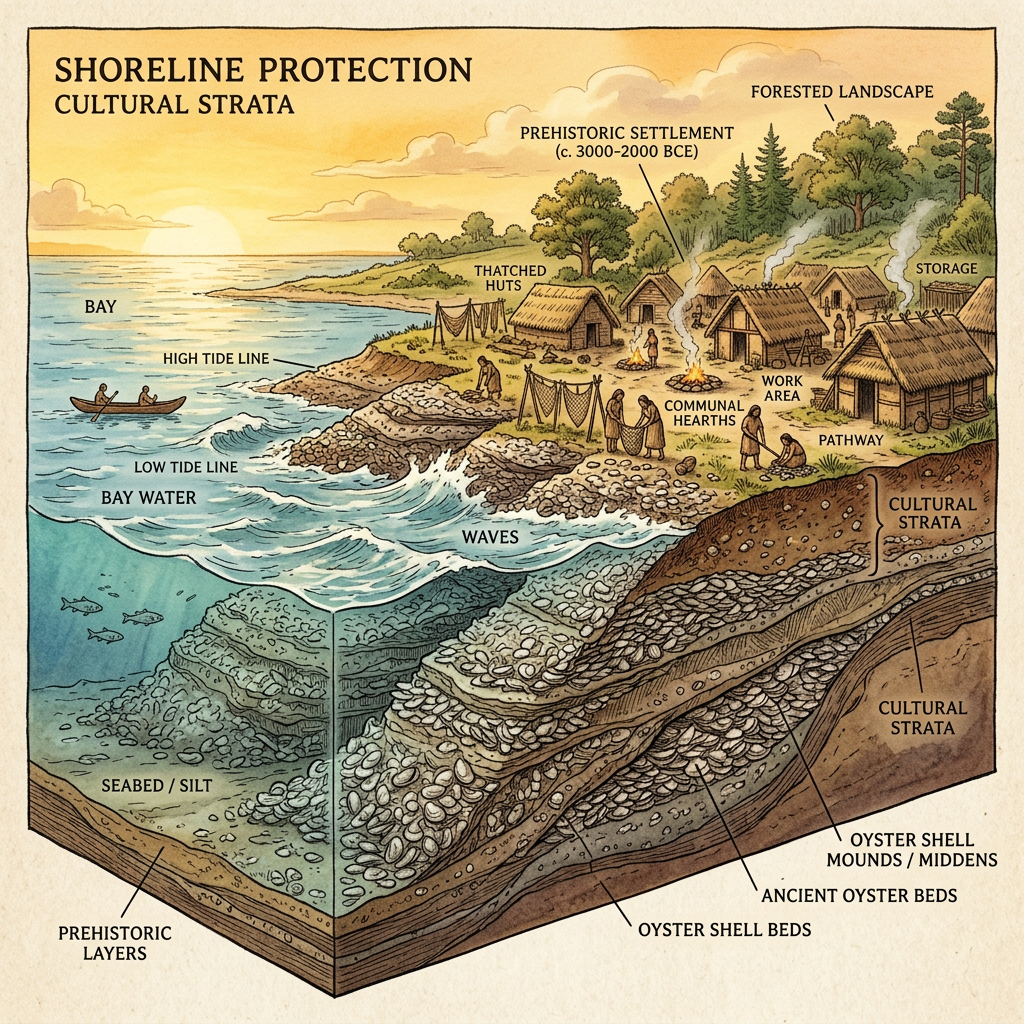
New research in climate archaeology has identified massive, submerged 'oyster terraces' along the Chesapeake Bay that functioned as prehistoric breakwaters against rising sea levels 3,000 years ago. Using underwater LIDAR and core sampling, scientists discovered that Indigenous communities engineered these expansive reefs to protect coastal settlements and enhance local food security. The structures show evidence of deliberate management, with shells being stacked and reinforced to withstand tidal surges during a period of rapid environmental change.
These findings offer a compelling model for modern coastal resilience, demonstrating how ancient populations utilized natural ecosystems to mitigate the effects of climate shift. The study suggests that the collapse of these managed reefs due to later over-harvesting significantly increased the vulnerability of the region to erosion. Today, conservationists are looking at these historical engineering techniques to design more effective 'living shorelines' in the face of current global warming.