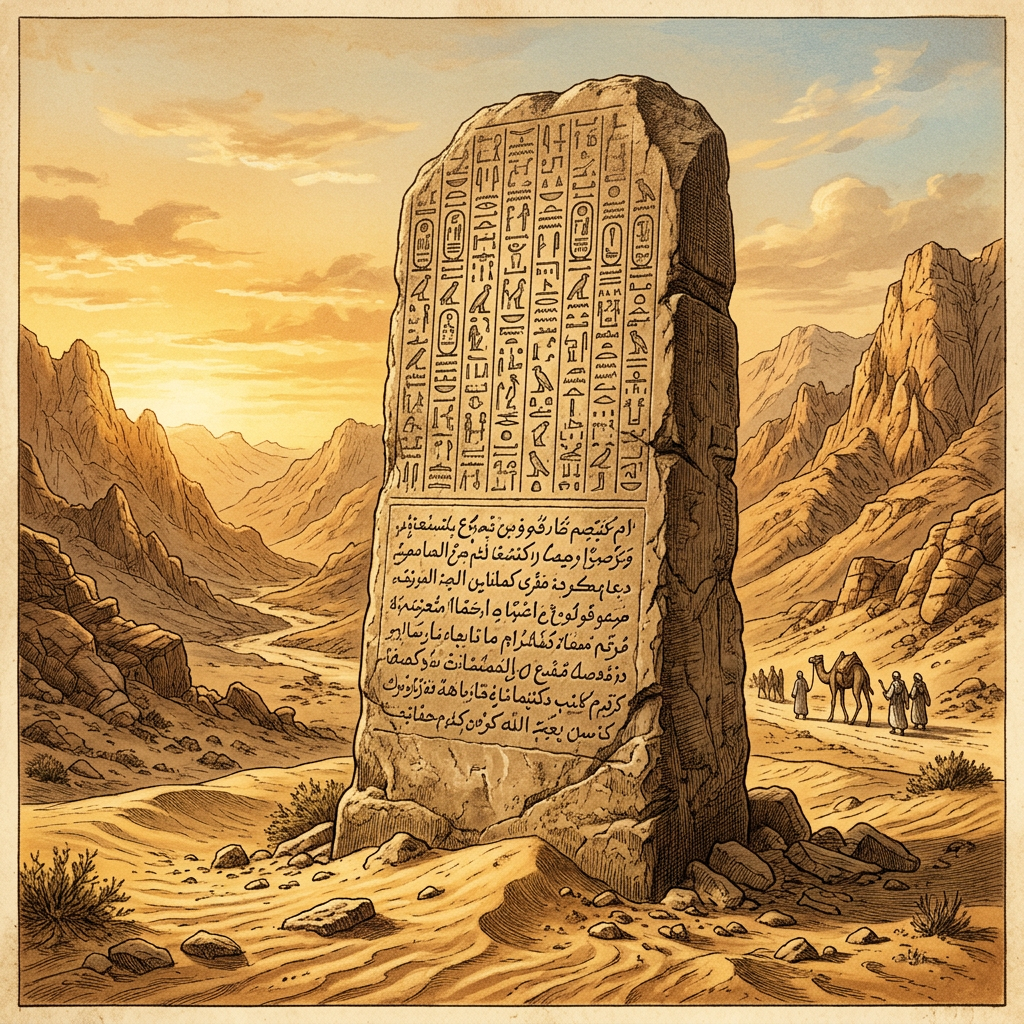
Archaeologists in Kandahar, Afghanistan, have unearthed a remarkable bilingual stele dating to the 3rd century BCE, which appears to record a philosophical exchange between a Greek Stoic philosopher and an Indian Vedic Brahmana. Written in Aramaic and Greek, the inscription outlines a debate on the nature of 'Atman' versus the Stoic concept of 'Pneuma.' This artifact provides the most direct evidence yet of deep intellectual cross-pollination in the wake of Alexander the Great's conquests.
The text on the stele, referred to as the 'Dialogue of Arachosia,' focuses on the definition of virtue and the possibility of 'living according to nature.' The Vedic sage is quoted as arguing for 'Rta' (cosmic order) as a self-correcting force, while the Stoic scholar proposes a more anthropocentric view of reason. This discovery suggests that the ancient world was far more interconnected philosophically than previously thought, with the Hindu-Kush region serving as a grand laboratory for the synthesis of Mediterranean and South Asian wisdom traditions.