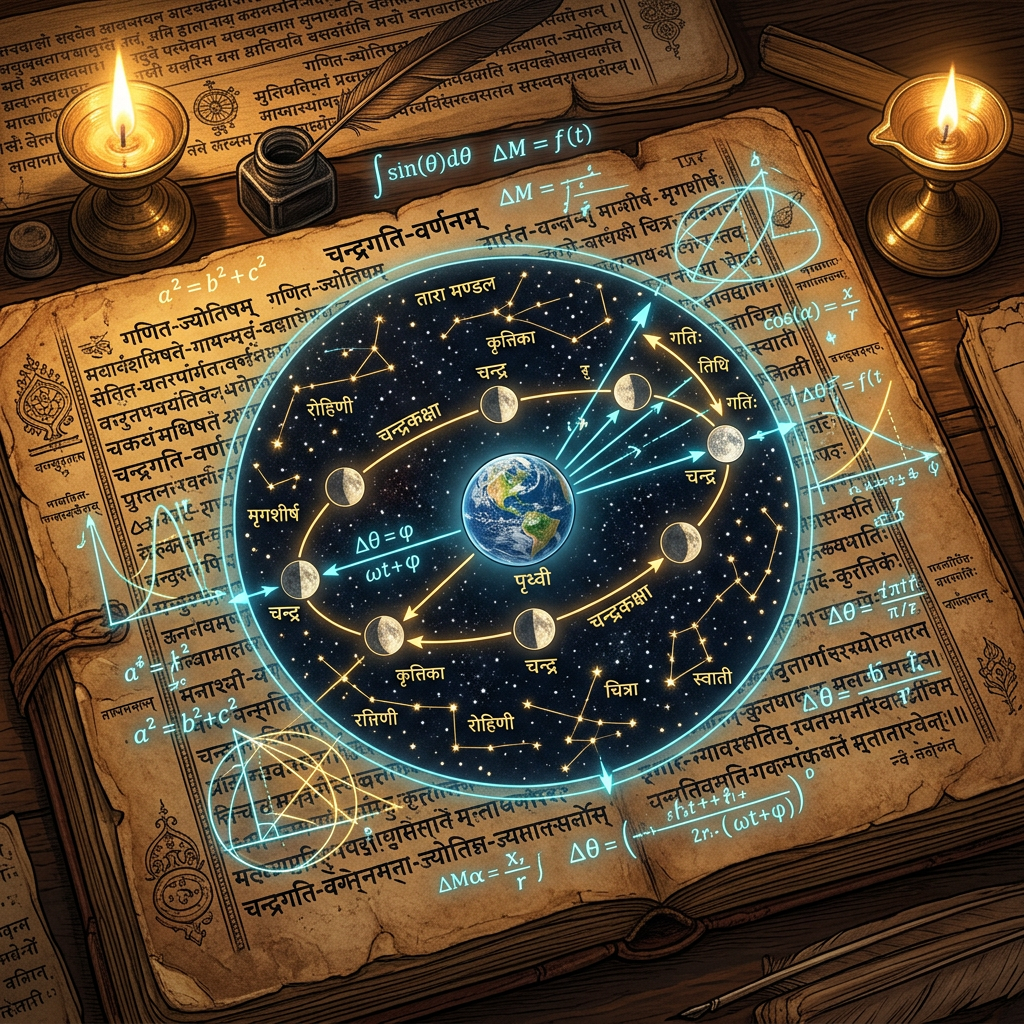
A groundbreaking study published in the Journal of Archaeological Science: Reports has revealed that the 8th-century mathematical traditions of Brahmagupta contained highly sophisticated algorithms for calculating lunar parallax. By analyzing recently digitized fragments of the Brahmasphutasiddhanta, researchers identified iterative numerical methods that corrected for observation errors caused by the Earth's curvature, specifically tailored for maritime and coastal observers.
The research demonstrates that these ancient scholars utilized a proto-trigonometric framework to model the apparent shift in the moon's position against background stars. These computational techniques were significantly more advanced than previously believed, offering a precision that would not be replicated in Western astronomical traditions for several centuries. This discovery highlights the depth of ancient Indian theoretical astronomy and its practical applications in high-precision navigation.