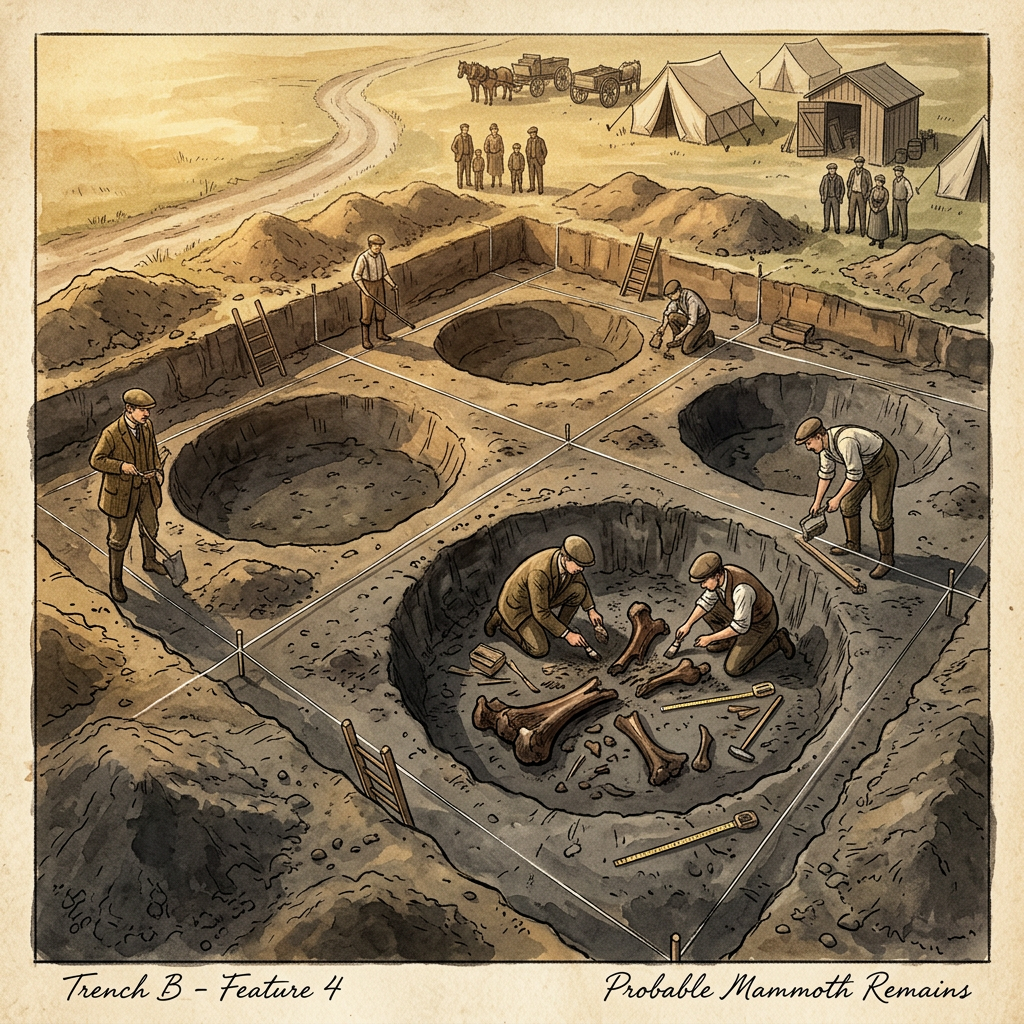
In a major discovery near the city of Rotterdam, researchers have identified a series of massive Neolithic feasting pits containing the remains of over 100 cattle. The site, which dates back to 4,000 BCE, shows evidence of highly organized communal slaughter and bone marrow extraction, suggesting it served as a primary hub for seasonal harvest festivals for nomadic tribes in the Rhine-Meuse delta.
Analysis of the soil revealed high concentrations of hazelnut shells and wild fruit residues, indicating that these festivals took place during the late autumn. The scale of the pits suggests that hundreds of people from disparate regions gathered here, marking the earliest known evidence of large-scale social networking and ritual exchange in the Doggerland periphery before the sea levels rose.