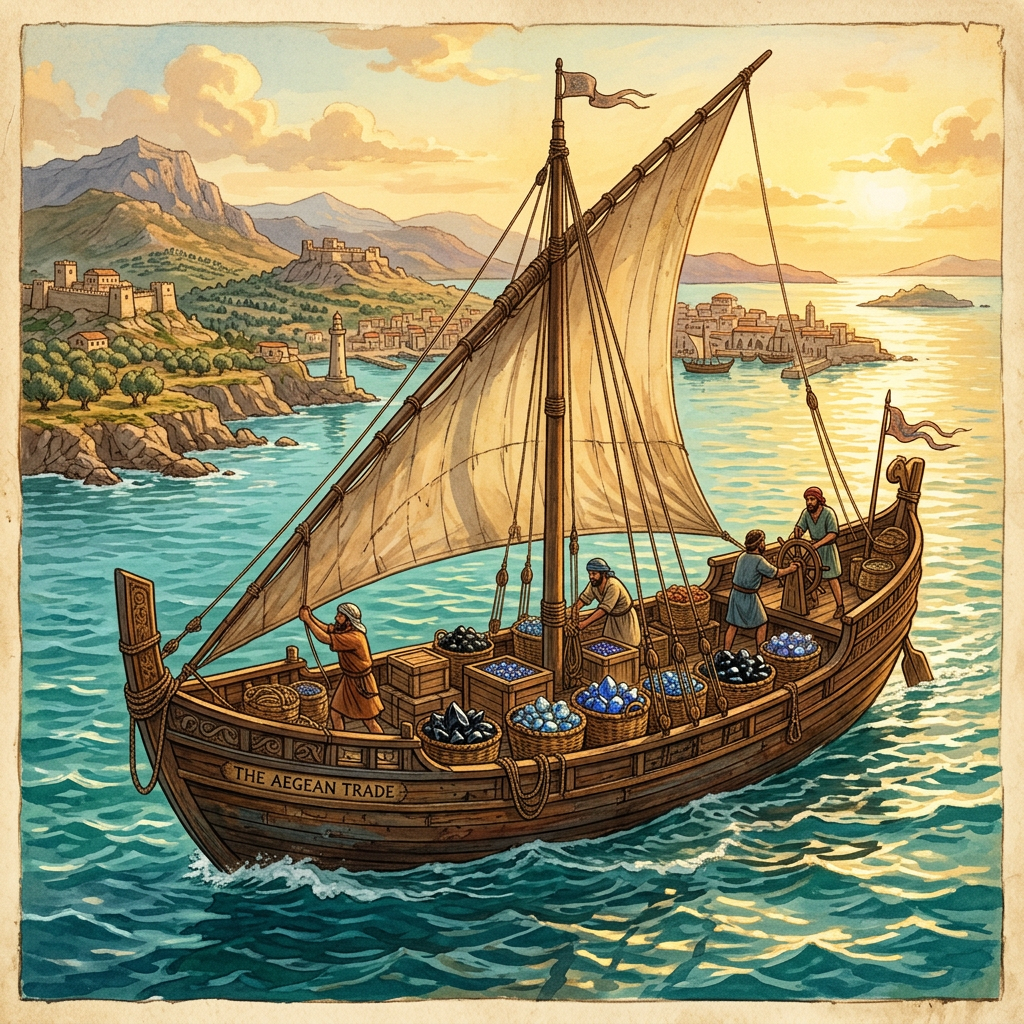
New geochemical analysis of artifacts found in coastal Oman has confirmed the existence of a 4,500-year-old maritime trade route dubbed the Lapis and Obsidian Seaway. By tracing the chemical signatures of obsidian from Ethiopia and lapis lazuli from Afghanistan, researchers have demonstrated that merchant mariners were crossing the Arabian Sea regularly during the mid-3rd millennium BCE. This discovery shifts our understanding of the scale and complexity of early Bronze Age globalization, connecting the Indus Valley Civilization directly to East African resource hubs.
The study highlights how ancient sailors utilized seasonal monsoon winds to navigate the open ocean, far earlier than previously thought. The maritime archaeology team found that coastal settlements served as cosmopolitan transshipment points where African gold and resins were exchanged for Indus Valley beads and textiles. This research underscores the importance of the Indian Ocean as a primary conduit for cultural and economic exchange in the ancient world.