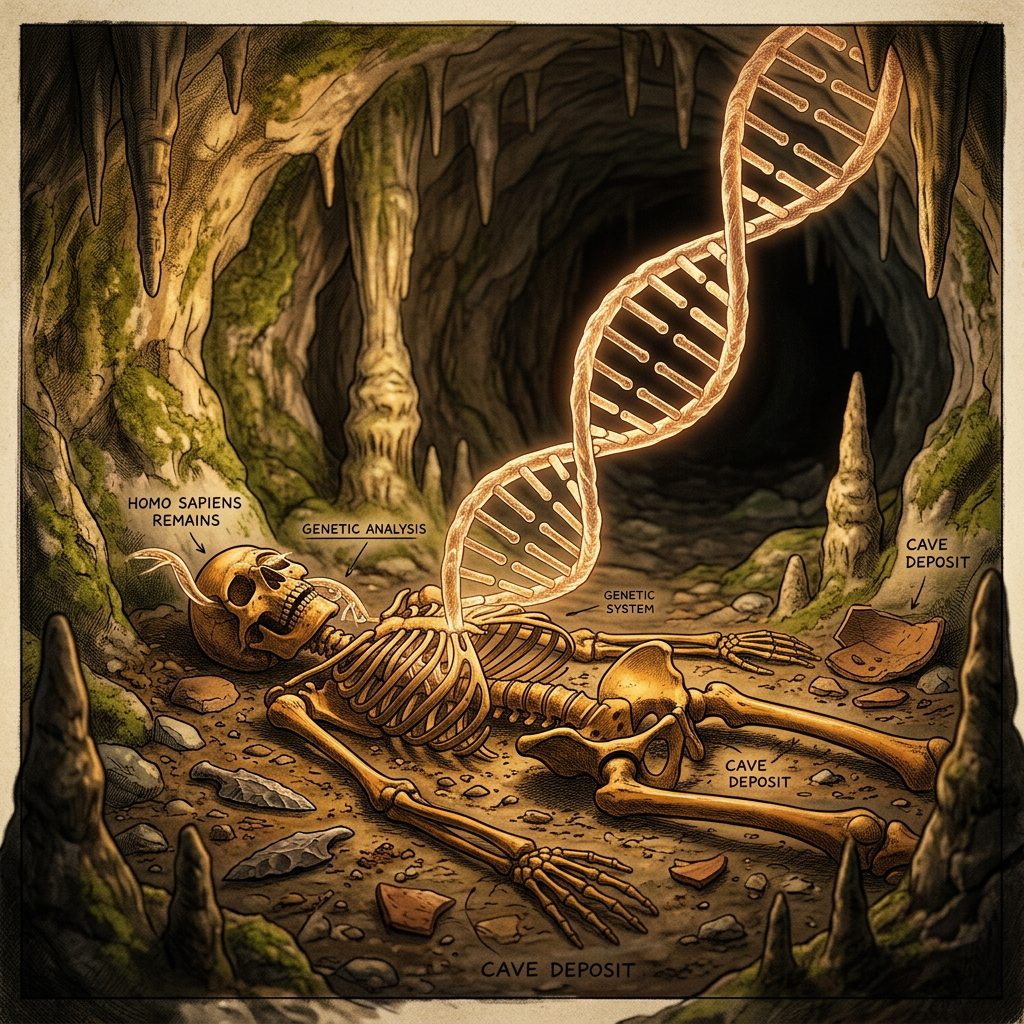
A new paleogenomic analysis featured in Nature Genetics has successfully sequenced the DNA of skeletal remains discovered in the Nallamala Highlands, dating back 11,000 years. The study identifies a unique set of genetic markers associated with a high degree of resistance to endemic tick-borne neurotoxins. This discovery suggests that early Holocene populations in the southern Indian interior had already undergone significant evolutionary selection to survive in dense, pathogen-rich forest ecosystems.
The research, led by an international team of geneticists, highlights a previously unknown genetic divergence in the South Asian hunter-gatherer lineage. By comparing these ancient genomes to modern populations, the study reveals that these protective alleles are still present in several indigenous communities in the region today. This continuity underscores the long-term biological adaptation of human groups to the specific ecological challenges of the Eastern Ghats, providing a new window into the deep history of human-pathogen co-evolution in the tropics.