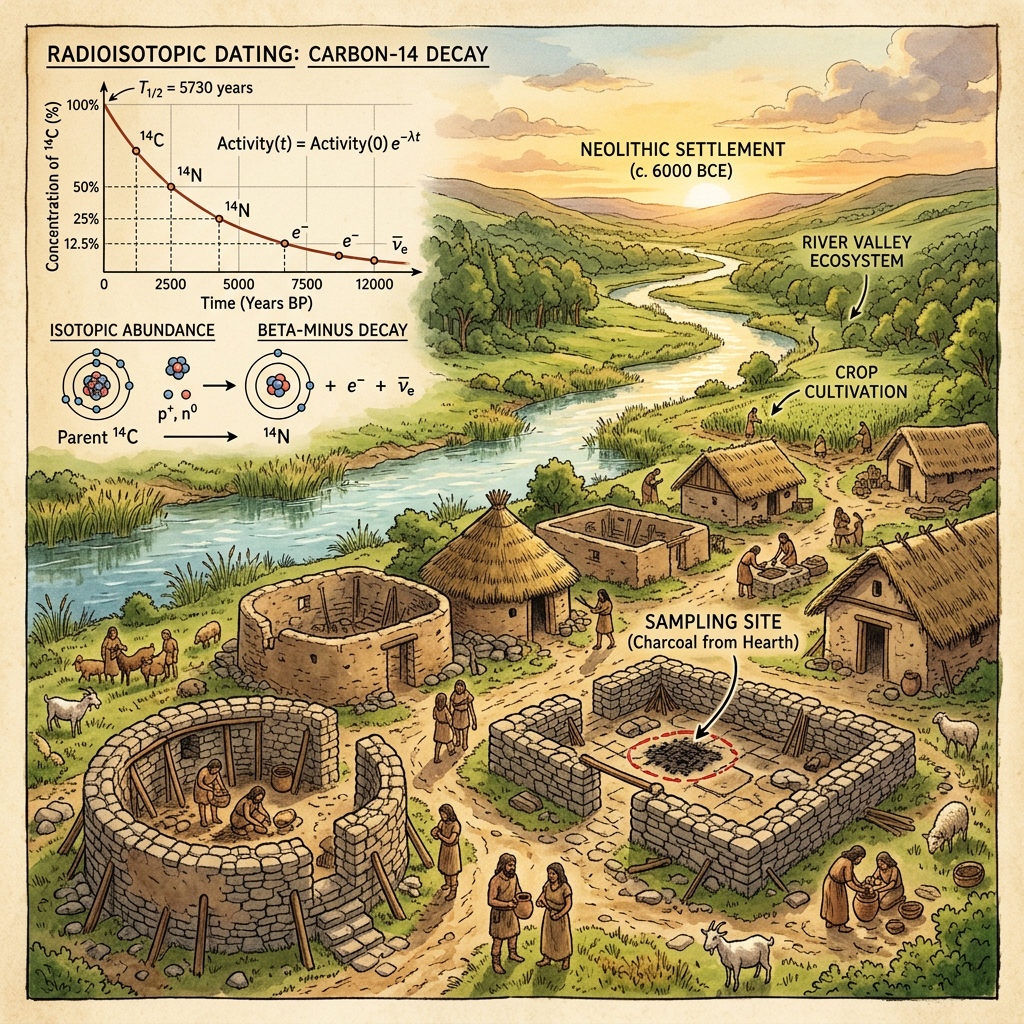
A groundbreaking study published in Scientific Reports has introduced a refined dating methodology using Samarium-147 isotopic chronometry. This technique, which measures the alpha decay of samarium into neodymium, has been applied to lithic substrates found in the Mahanadi Valley of Eastern India. The results have pushed back the onset of sedentary Neolithic habitation in the region to approximately 7200 BCE, nearly a millennium earlier than previously estimated using standard radiocarbon techniques.
Researchers suggest that this new chronology provides critical evidence for an independent center of plant domestication and social organization in the tropical riverine corridors of the Indian peninsula. The precision of Samarium-147 dating allows scientists to bypass the contamination issues often associated with carbon-14 in high-humidity environments, offering a more stable timeline for the transition from foraging to specialized agro-pastoralism. This finding challenges existing models that suggest a singular diffusion of agricultural technology from the Northwest, pointing instead to a mosaic of simultaneous developments across the subcontinent.