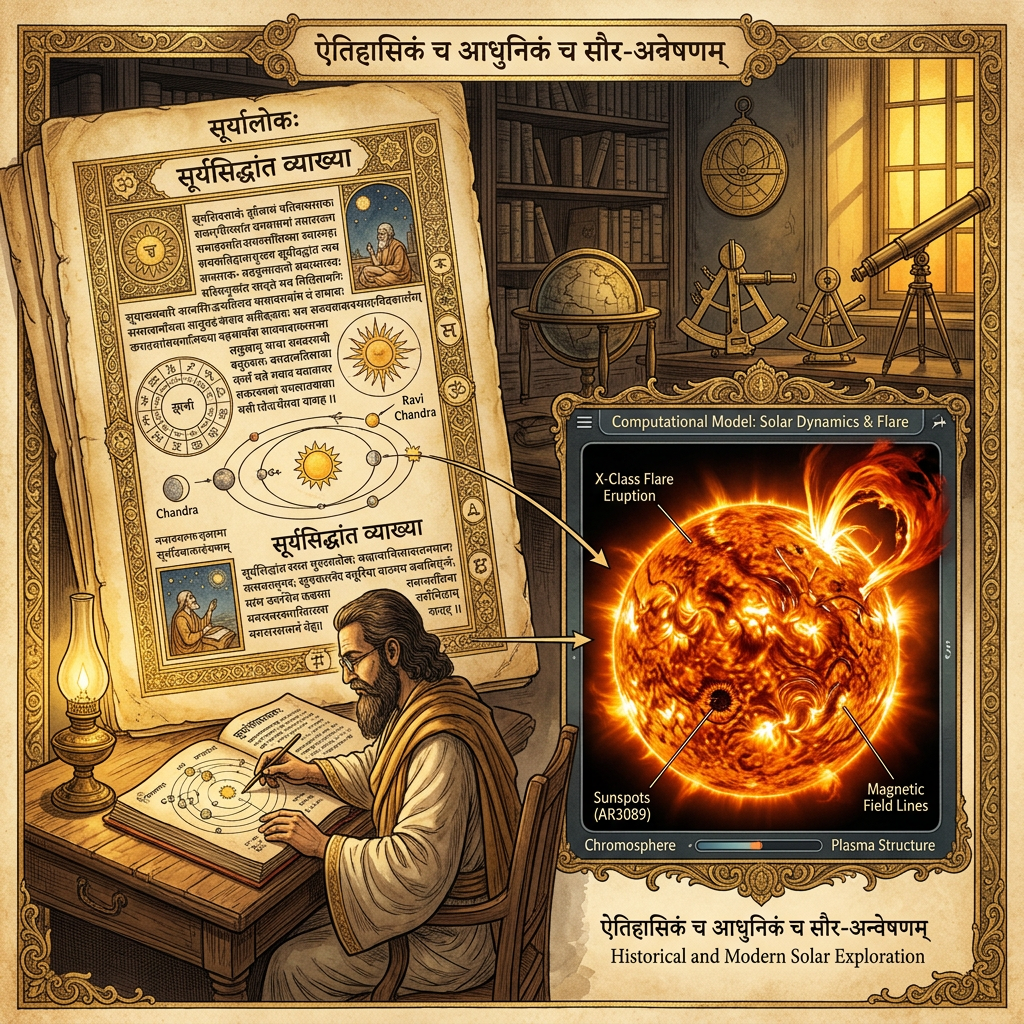
A new study published in the Computational Archaeology Review has applied modern astrophysical models to the 9th-century Khandakhadyaka manuscripts. The research indicates that the tables provided in these Sanskrit texts contain recursive algorithms capable of modeling non-linear solar chromospheric fluctuations. This level of mathematical complexity suggests that ancient Indian astronomers were tracking solar behavior with higher precision than previously recognized by Western scholars.
The study found that the specific corrections applied to the solar motion in the Khandakhadyaka correspond closely with modern data on the 11-year solar cycle and its impact on atmospheric visibility. By using computational logic, the researchers demonstrated that these 9th-century algorithms could predict subtle changes in the sun's appearance during eclipses. This breakthrough redefines our understanding of early medieval Indian mathematics as a tool for empirical physical modeling rather than purely calendrical calculation.