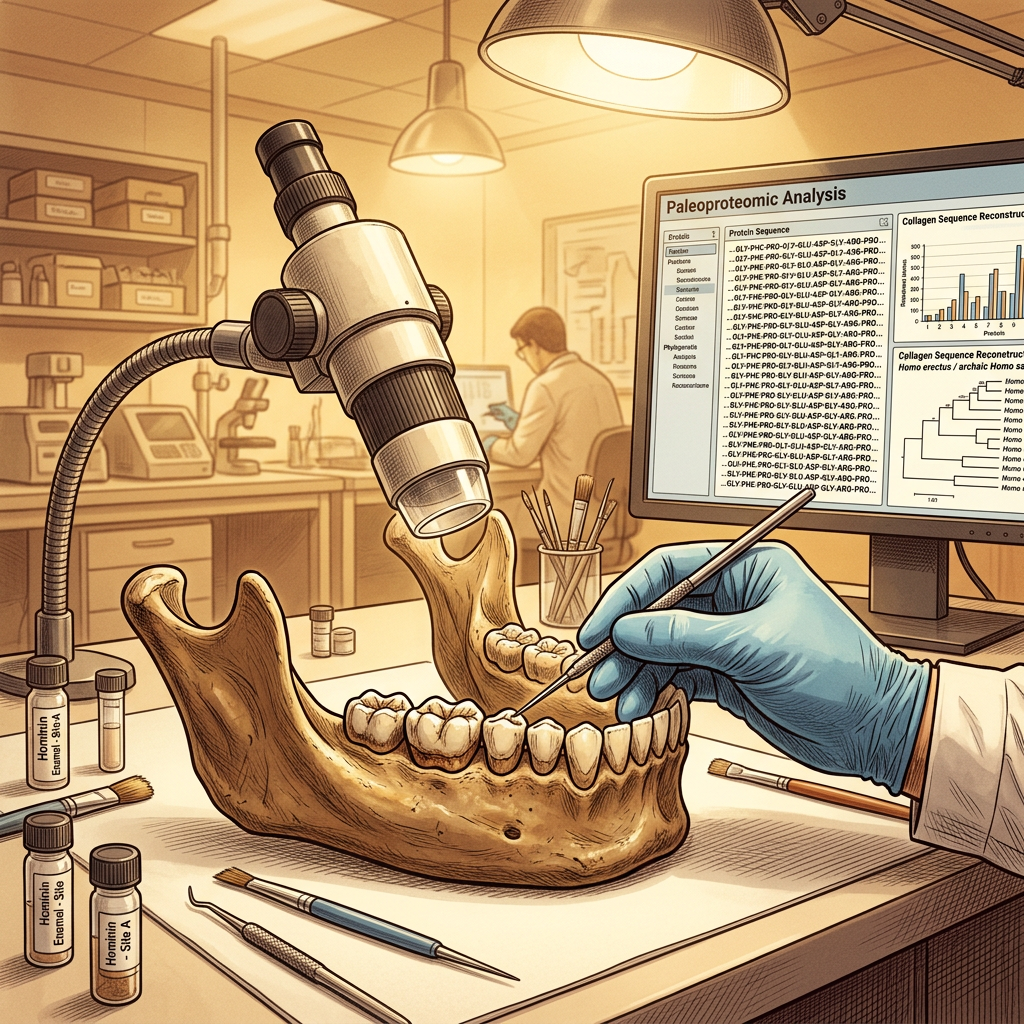
In a major discovery for anthropological research, proteomic analysis of fossilized teeth found near Didwana in the Thar Desert has identified a distinctive Middle Pleistocene lineage of ancient humans. The proteins extracted from the enamel reveal a signature that is genetically separate from both Neanderthals and Denisovans, suggesting a long-surviving, localized hominin population in the Indian subcontinent. The findings were published in the latest issue of the Journal of Paleogenomics.
This study provides the first molecular evidence of the biological identity of the 'archaic' hominins that inhabited South India during the late Middle Pleistocene. The protein sequences indicate adaptations to arid, high-alkaline environments, reflecting the conditions of the prehistoric Thar Desert. This research fills a critical gap in the human evolutionary map, confirming that India was not merely a corridor for migration but a region of significant independent hominin evolution and survival.