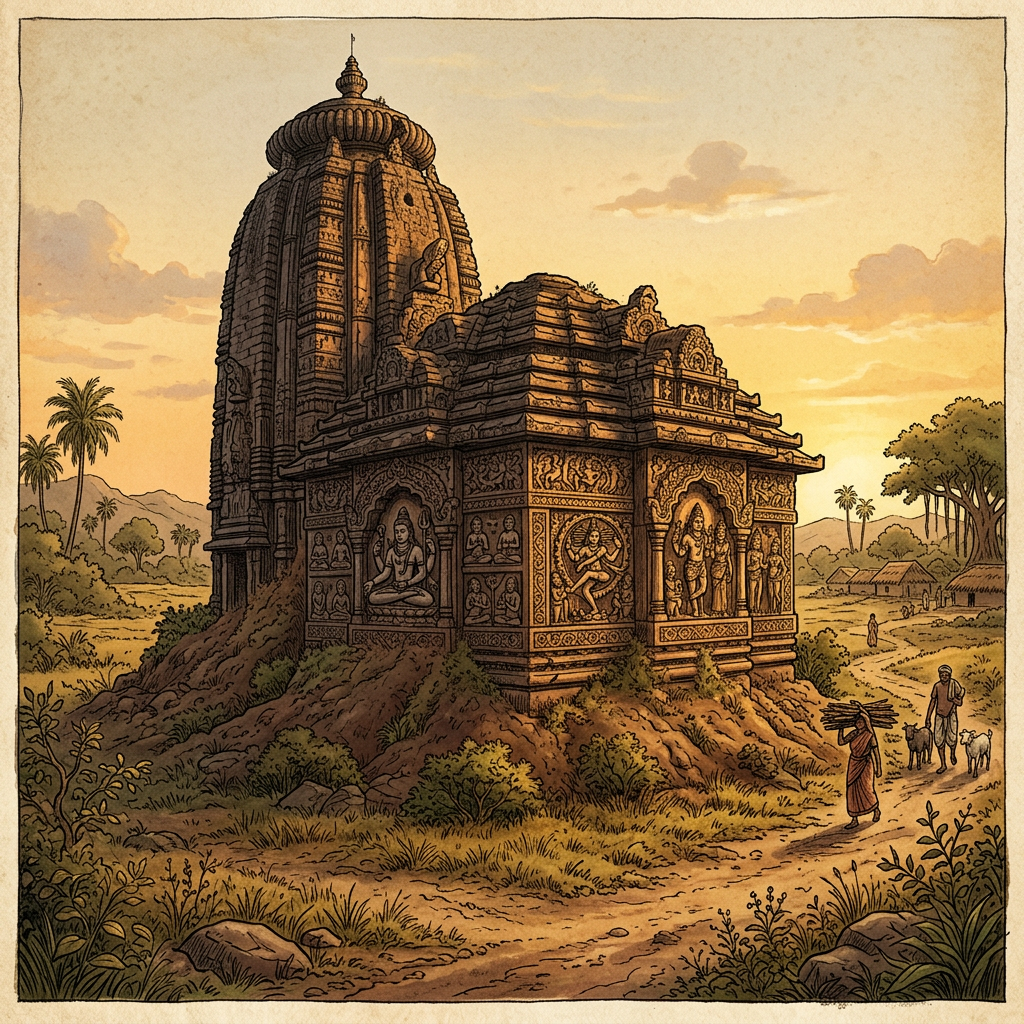
Archaeologists in Odisha have identified a previously unknown 9th-century temple dedicated to Shiva in the Khordha district. Attributed to the Bhauma-Kara dynasty, the temple is exceptionally significant for its series of intact friezes depicting Lakulisa, the historical founder of the Pashupata sect of Shaivism. These carvings show the deity in various yogic postures, surrounded by his disciples, and provide crucial insights into the spread of Tantric Shaivism in Eastern India during the early medieval period.
The structure is built of locally sourced khondalite stone and follows the classic Rekha Deula architectural style. Although the main shikhara (tower) has partially collapsed, the sanctum remains intact, housing a massive monolithic Shiva Lingam. Local authorities and the Odisha State Museum are working to secure the site, which was found during an exploratory survey of the Daya River valley. Researchers hope that upcoming chemical cleaning will reveal the original mineral pigments that once decorated the elaborate exterior reliefs.