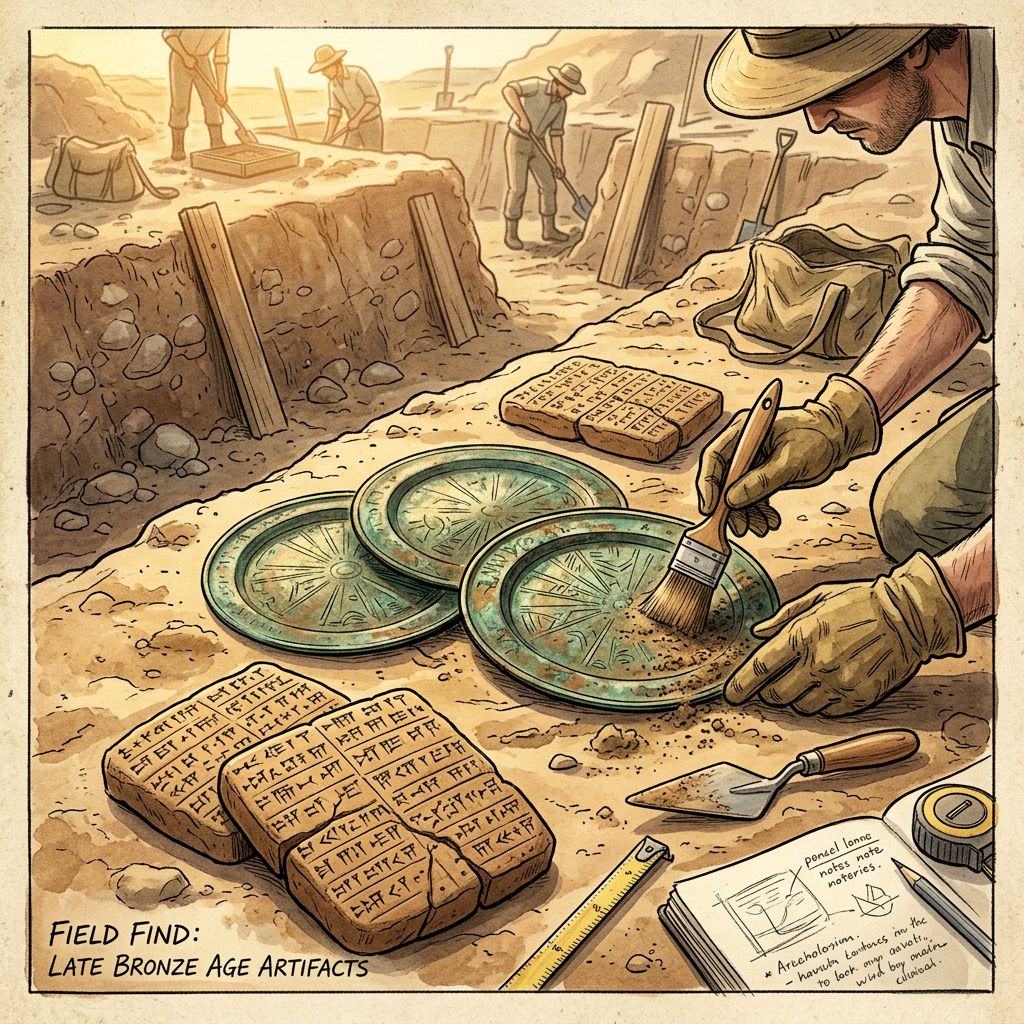
Excavations at the ancient city of Larsa in southern Iraq have yielded a remarkable archive of cuneiform tablets detailing a sophisticated system for tracking the sun’s path across the sky. The tablets describe a group of temple officials known as the 'Shadow-Watchers' who recorded daily solar positions to optimize the orientation of public buildings and irrigation canals. The findings suggest the Sumerians possessed a proto-scientific understanding of solar geometry and seasonal shifts.
Alongside the tablets, archaeologists discovered a set of bronze plates with radial markings that appear to be heliostat templates for calibrating stone sun-dials. This 'Solar Bureau' likely operated as an early civil engineering department, ensuring that Larsa’s architecture leveraged natural light for heating and ritualistic solar alignments. Experts believe this is the most direct evidence of advanced astronomical application in Mesopotamian urban planning found to date.