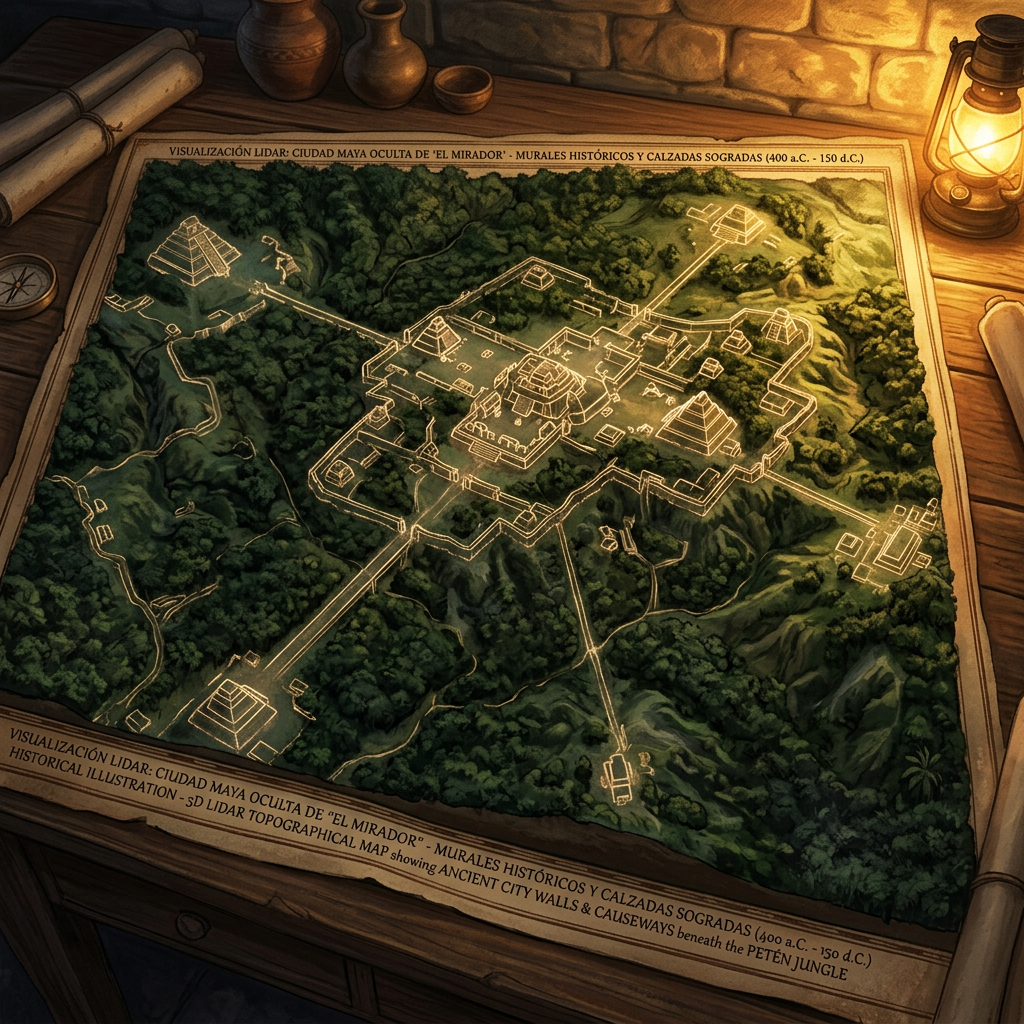
A large-scale LiDAR survey of the dense jungles in the Petexbatún region of Guatemala has uncovered a previously unknown specialized trade network dedicated to vanilla orchid cultivation. The scans revealed hundreds of miles of narrow causeways connecting small, fortified agricultural hubs. These hubs were strategically positioned near humid limestone ravines, the ideal environment for growing ancient vanilla, which was highly prized by the Maya elite as a luxury flavoring and ritual offering.
The LiDAR data shows that these vanilla farms were protected by concentric defensive walls and watchtowers, highlighting the immense economic value of the spice. Researchers believe that this 'Vanilla Road' allowed the local rulers of the Late Classic Period to maintain wealth and political leverage after the collapse of larger Maya urban centers. This is the first time a specific perishable luxury crop has been linked to a dedicated, fortified infrastructure in the Maya world.