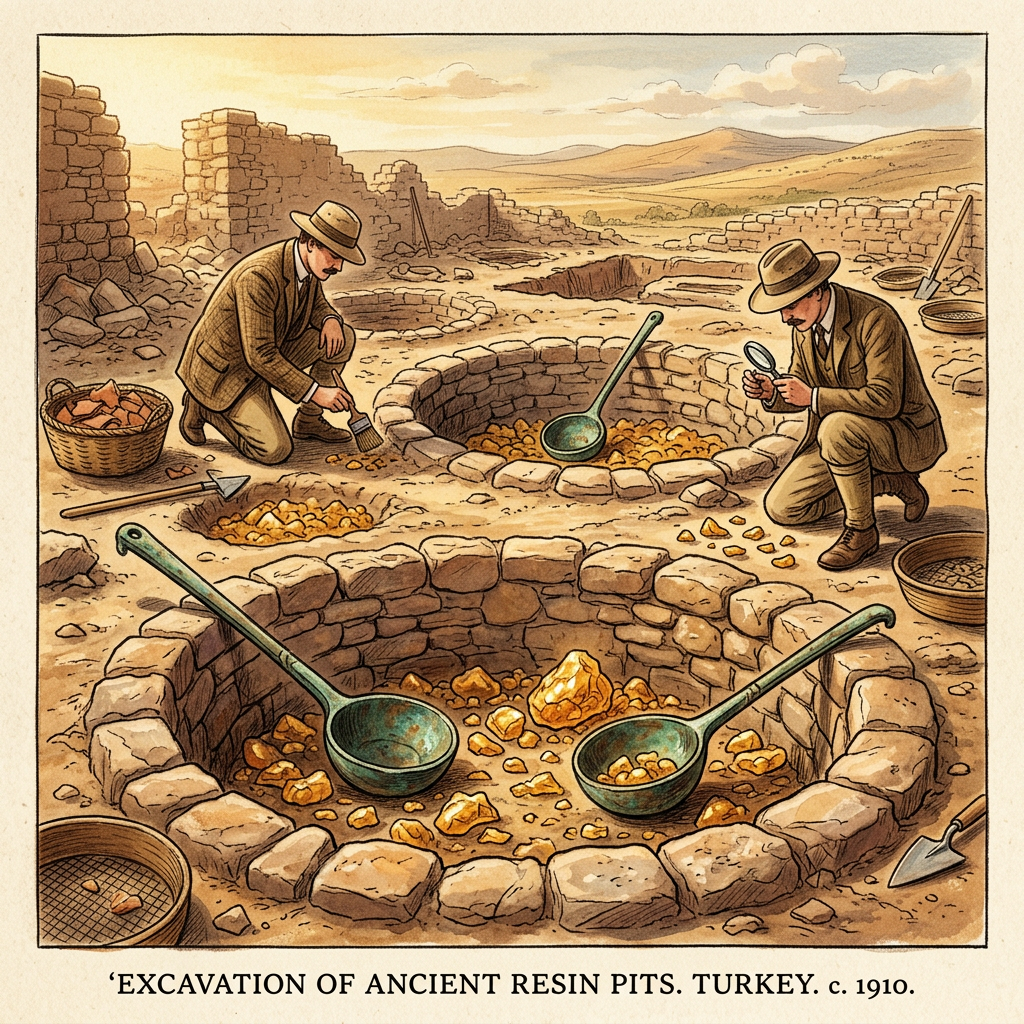
Archaeologists excavating a rural sanctuary near the ancient capital of Gordion have uncovered a series of subterranean offering pits dating to the 2nd-century BC. These pits contain remarkably preserved botanical remains, most notably large quantities of saffron-infused resin and charred grain, providing the first physical evidence of the legendary 'Golden Harvest' banquets mentioned in fragmented Phrygian texts. The discovery suggests that these festivals were far more organized and widespread than previously believed, serving as a vital social glue for agricultural communities during the Hellenistic period.
Inside the pits, researchers also found large-scale ceramic basins and bronze ladles used for communal serving. Chemical analysis of the vessels confirmed the presence of a fermented honey-and-saffron beverage, which was likely consumed during multi-day celebrations honoring the Phrygian mother goddess. Lead researcher Dr. Elif Demir noted that the precisely layered sequence of the offerings indicates that these festivals occurred annually over several centuries, maintaining a rigid ritual structure that transitioned from Phrygian to Roman influence without losing its core identity.