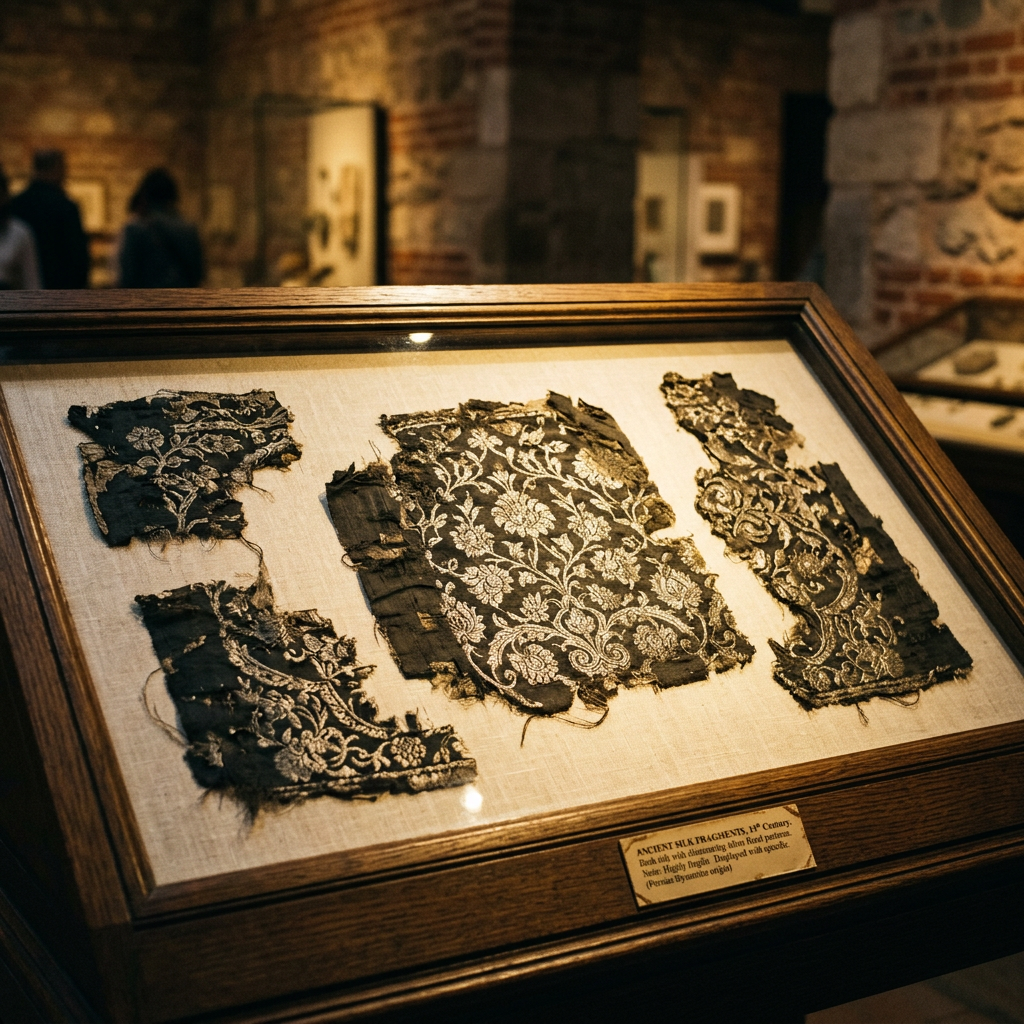
During a restoration project at a sub-temple in Nara, researchers discovered a sealed lacquer chest containing fragments of 'silver-threaded' silk banners. Stylistic analysis and radiocarbon dating place these textiles in the mid-8th century, the height of the Tempyo era. The banners are decorated with motifs of flowing water and celestial flames, bearing striking similarities to the iconography used in the modern-day Omizutori (Water-Drawing) ceremony at Todai-ji Temple.
The discovery provides the earliest physical proof of the grand processional equipment used in Nara's early Buddhist festivals. The presence of silver-wrapped threads indicates a level of imperial sponsorship that was previously only theorized in historical chronicles like the Shoku Nihongi. Scholars believe these banners were carried by 'ascetic monks' during the transition from winter to spring, serving as talismans to purify the city from plague and drought, a tradition that has survived for over 1,200 years.