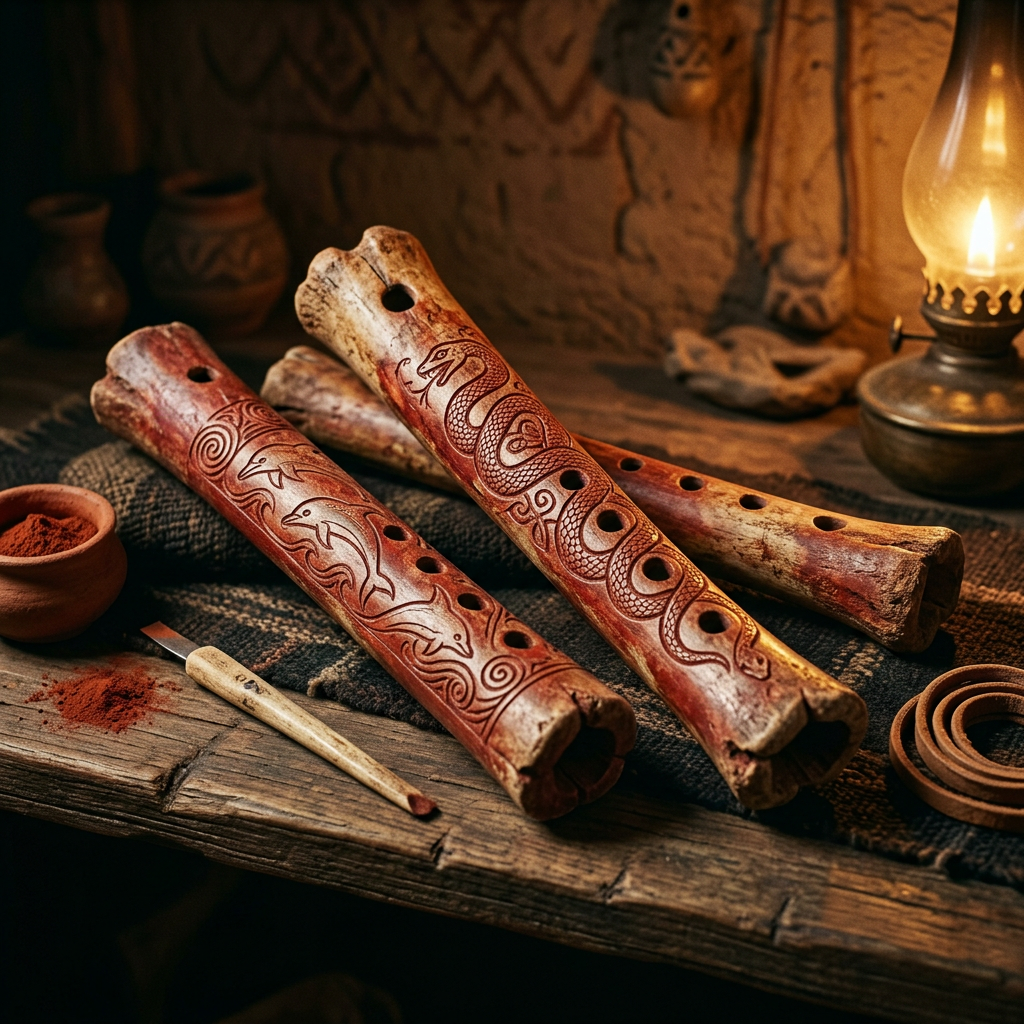
In the Ucayali region of the Peruvian Amazon, a team of archaeologists has unearthed a set of four 'cinnabar-stained' trumpets made from human femora, dating back to 500 BC. The instruments were found within a circular earthen plaza that served as a processional hub for ancient Panoan-speaking groups. The trumpets are engraved with stylized motifs of anacondas and pink river dolphins, which tribal elders today identify as 'Master Spirits' of the water.
This discovery provides the first physical evidence of ancient river-blessing festivals where music was used to negotiate with the spirits of the floodplains. The use of cinnabar, a pigment sourced from the high Andes, demonstrates that even 2,500 years ago, Amazonian festival organizers were involved in long-distance trade to acquire sacred materials. The resonance of these bone instruments is said to mimic the low frequency of a dolphin's call, highlighting a deep acoustic connection to the jungle environment.