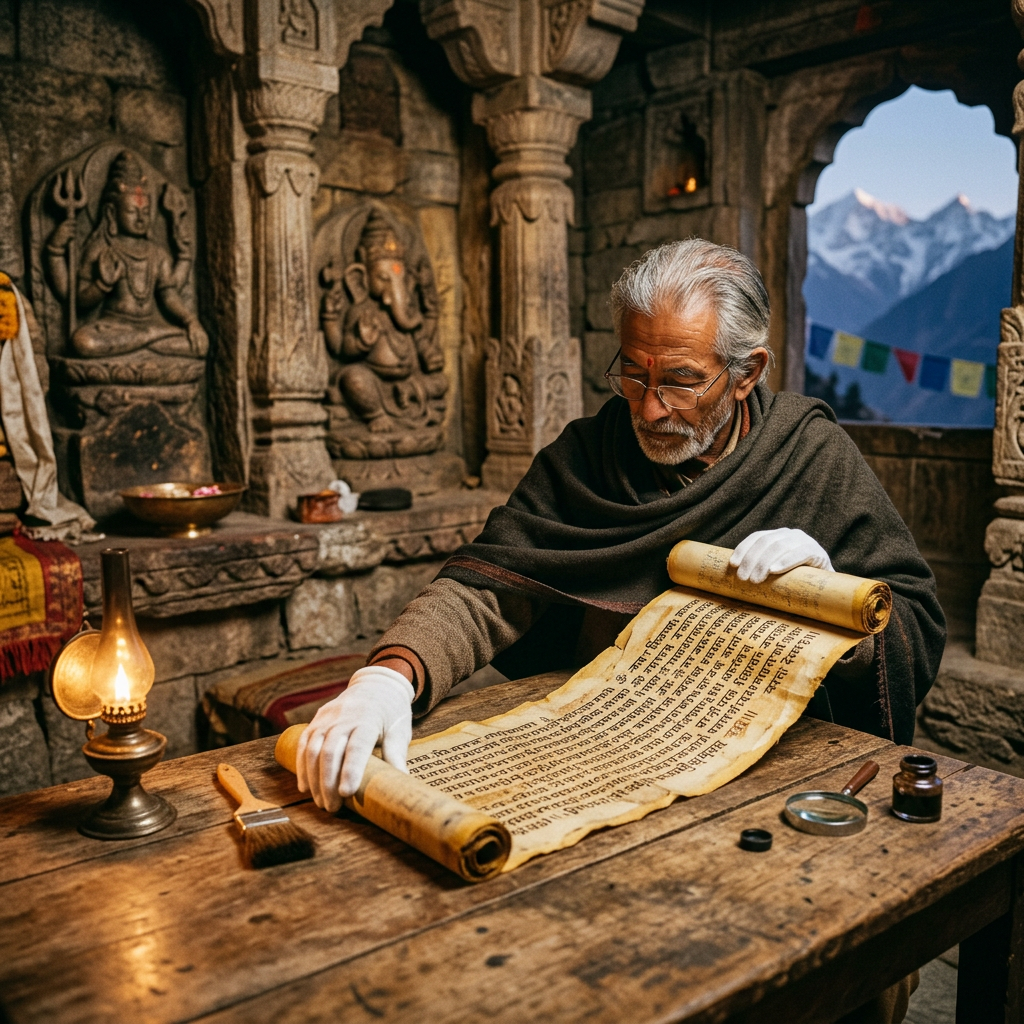
A hidden chamber in a remote monastery in the Zanskar region of Ladakh has yielded a 9th-century silk-wrapped scroll titled 'Prana-Samvada'. The document records a philosophical dialogue between two sages on the nature of Prana (vital breath) and its intricate connection to the five great elements or Pancha Bhoota.
The text bridges the gap between early Vedic cosmology and the later systems of Hatha Yoga, describing the human body as a microcosmic laboratory where the breath serves as the catalyst for spiritual transformation. This discovery highlights the role of high-altitude hermitage traditions in preserving and evolving complex metaphysical theories involving biology and consciousness.