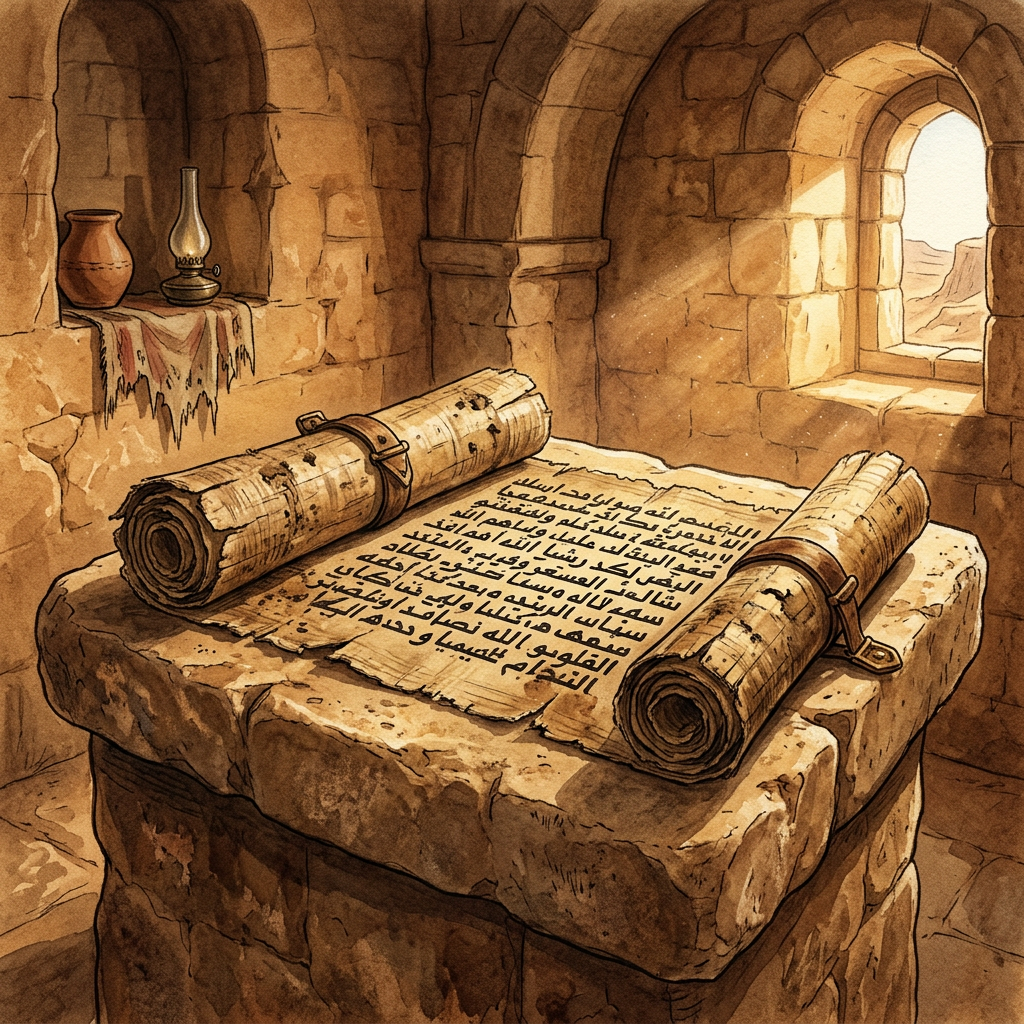
Recent excavations at the site of Qasr al-Hallabat have unearthed a hidden scriptorium dating to the early Umayyad Caliphate. Archaeologists found a cache of preserved papyrus fragments containing some of the earliest known Arabic translations of Greek philosophical texts. The facility appears to have been a center for intellectual exchange, housing scribes who worked on both religious and scientific manuscripts.
Among the finds are drafting tools made of bone and inkwells with residue of high-quality soot and resin. Experts believe this scriptorium confirms that the "desert castles" of Jordan were not just hunting retreats, but active hubs of learning and administration during the transition from the Byzantine to the Islamic era.