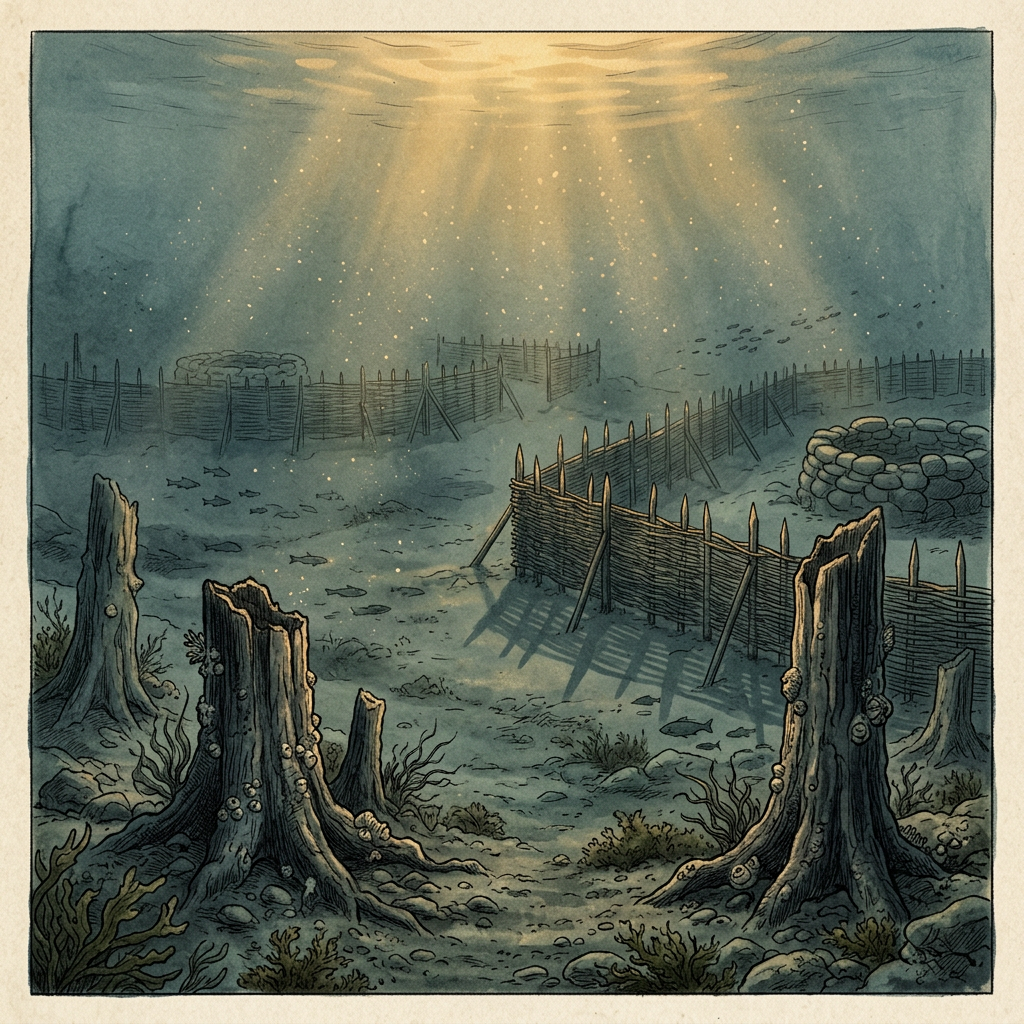
Marine archaeologists investigating the submerged landscape of the North Sea have discovered a perfectly preserved 7,000-year-old forest containing evidence of sophisticated Mesolithic engineering. Using high-resolution sonar and underwater drones, the team identified a series of complex wattle-and-stake structures arranged in a crescent formation, which they believe functioned as massive tidal traps for capturing fish and eels.
This discovery provides crucial data on how early human populations adapted to rapid sea-level rise following the last ice age. The wooden remains, kept intact by anaerobic peat layers, show signs of advanced carpentry and strategic placement relative to ancient tidal flows. Researchers state that these structures represent some of the earliest known examples of landscape-scale environmental engineering, offering lessons on prehistoric resilience that are relevant to modern coastal climate challenges.