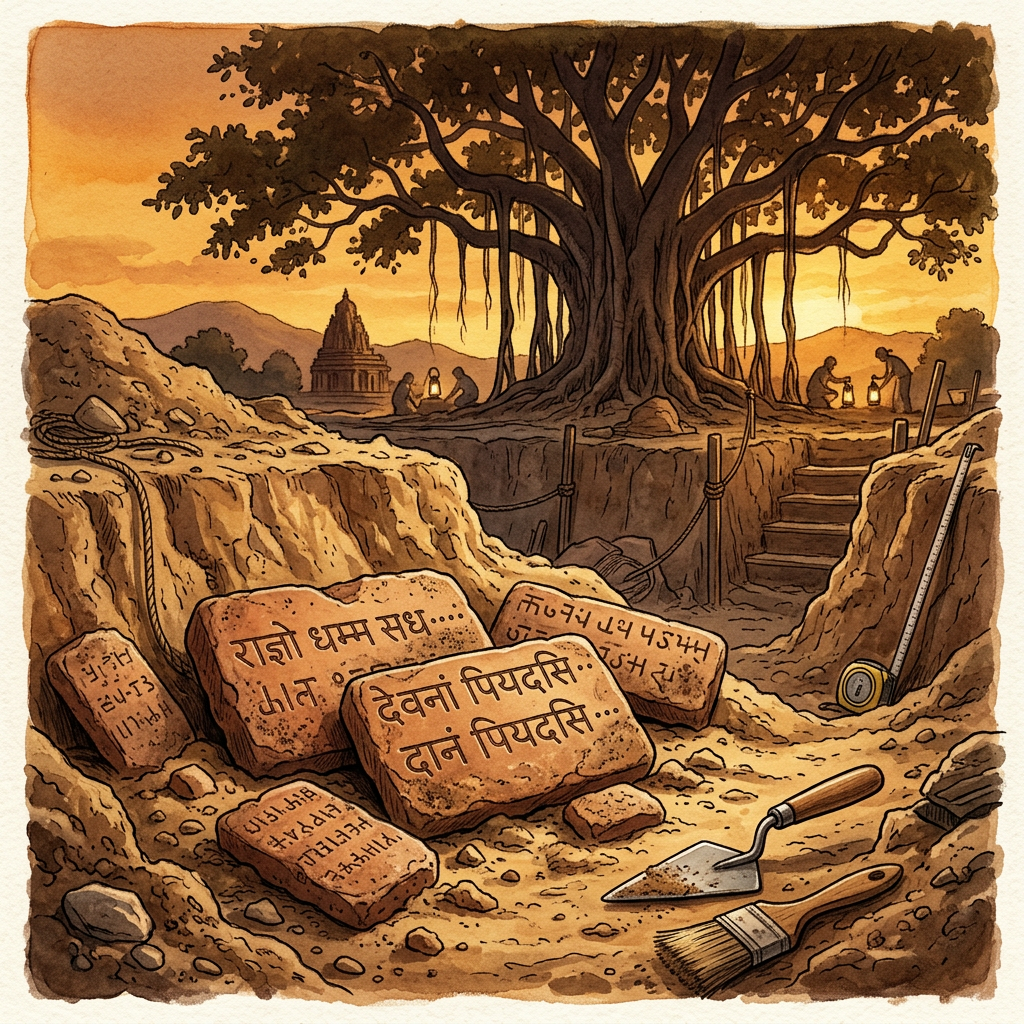
Excavations in the Ghaggar-Hakra river basin have yielded a series of rare clay tablets dating to the 5th-century BCE. Known as the 'Sahasa-Niti' inscriptions, these artifacts contain aphorisms related to the Vedic philosophy of courage, or Sahasa. Unlike later martial codes, these texts frame courage as a mental and ethical virtue, essential for upholding Dharma in times of social upheaval. The inscriptions provide a rare window into the moral landscape of the late Vedic period, emphasizing the internal struggle over physical combat.
Linguistic analysis of the tablets indicates a transitional form of Sanskrit that predates classical standards. This discovery suggests that specialized ethical treatises on specific virtues were more common in early Vedic society than previously believed. Archaeologists believe the site may have been a specialized Gurukul or academy dedicated to the study of philosophical ethics, marking it as one of the oldest known centers of ethical education in the Indian subcontinent.