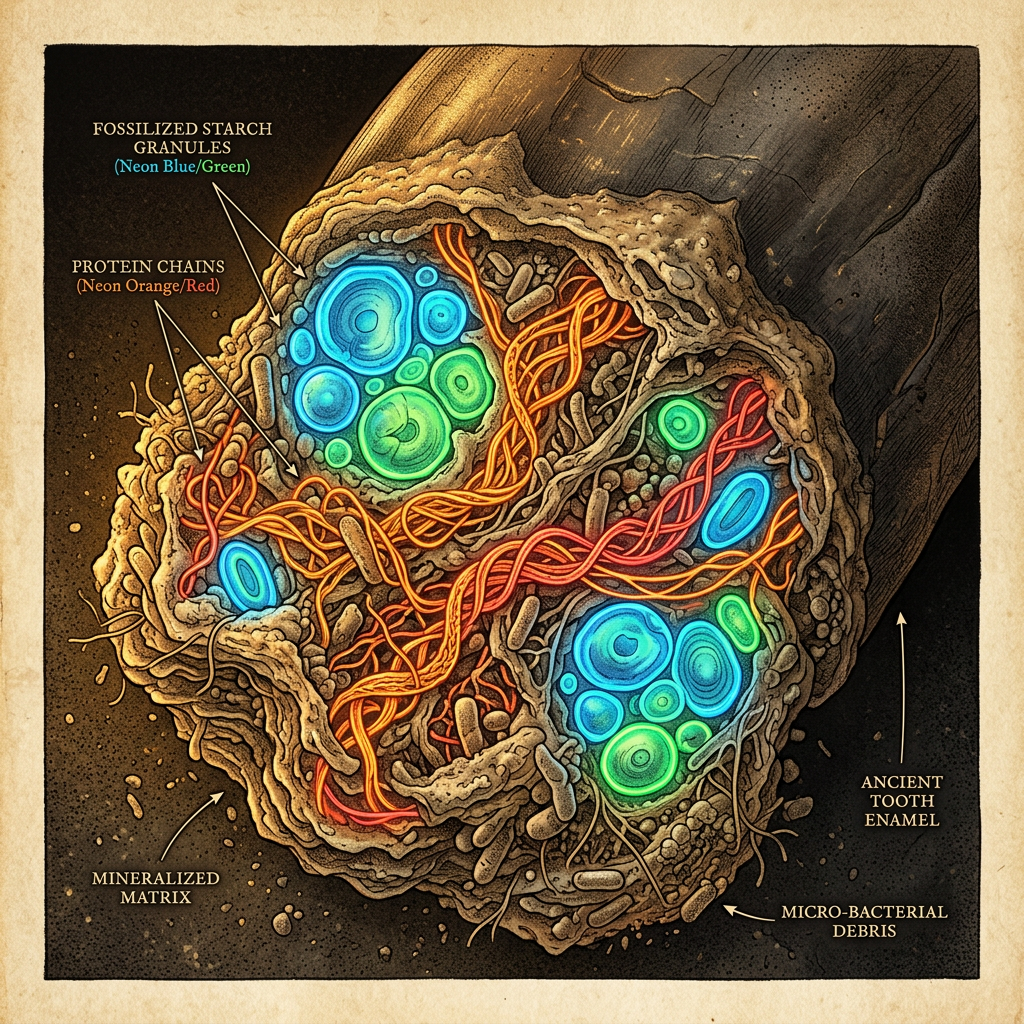
A new study in the Journal of Archaeological Science has used advanced proteomics to analyze 13,000-year-old dental calculus from remains found in the Zagros Mountains. The researchers identified high concentrations of specialized starch-degrading salivary enzymes, providing the earliest evidence of genetic and biological selection for high-carbohydrate diets predating the advent of organized agriculture.
The protein signatures trapped in the calcified plaque indicate that these Late Pleistocene hunter-gatherers were already consuming large quantities of processed wild grains and tubers. The high expression of the AMY1 protein suggests that these populations had already developed the biological machinery to extract maximum energy from starches, creating the physiological foundation that would later facilitate the transition to settled farming. This discovery rewrites the timeline of human metabolic evolution, showing that our ancestors were 'predisposed' for agriculture long before the first seeds were sown.