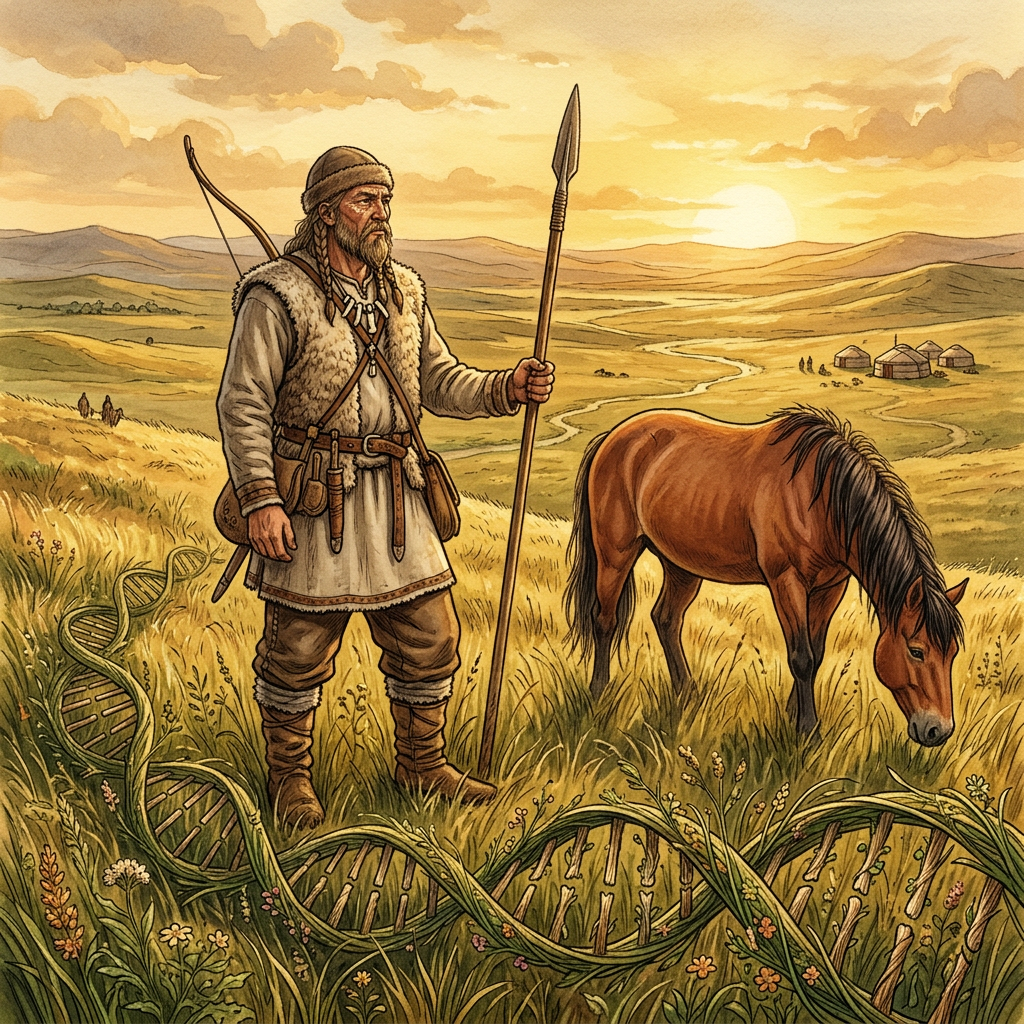
A scholarly publication in Cell Genomics has detailed the analysis of skeletal remains from the Don Basin, dating back to 3500 BCE. The study identifies the first definitive genetic signature associated with the consumption of horse-milk proteins among Eneolithic hunter-gatherer-pastoralists. This genetic adaptation appears to have emerged rapidly following the initial domestication of horses in the Pontic-Caspian steppe, providing a significant survival advantage during seasonal forage shortages.
The research teams identified specific mutations in the genes regulating proteolysis that allowed these populations to process the high protein and sugar content of mare's milk without the gastrointestinal distress typically seen in non-adapted groups. This finding marks a critical milestone in understanding the co-evolution of humans and domestic animals, suggesting that dietary shifts were as much a driver of genetic change as migration was during the formation of early Steppe societies.