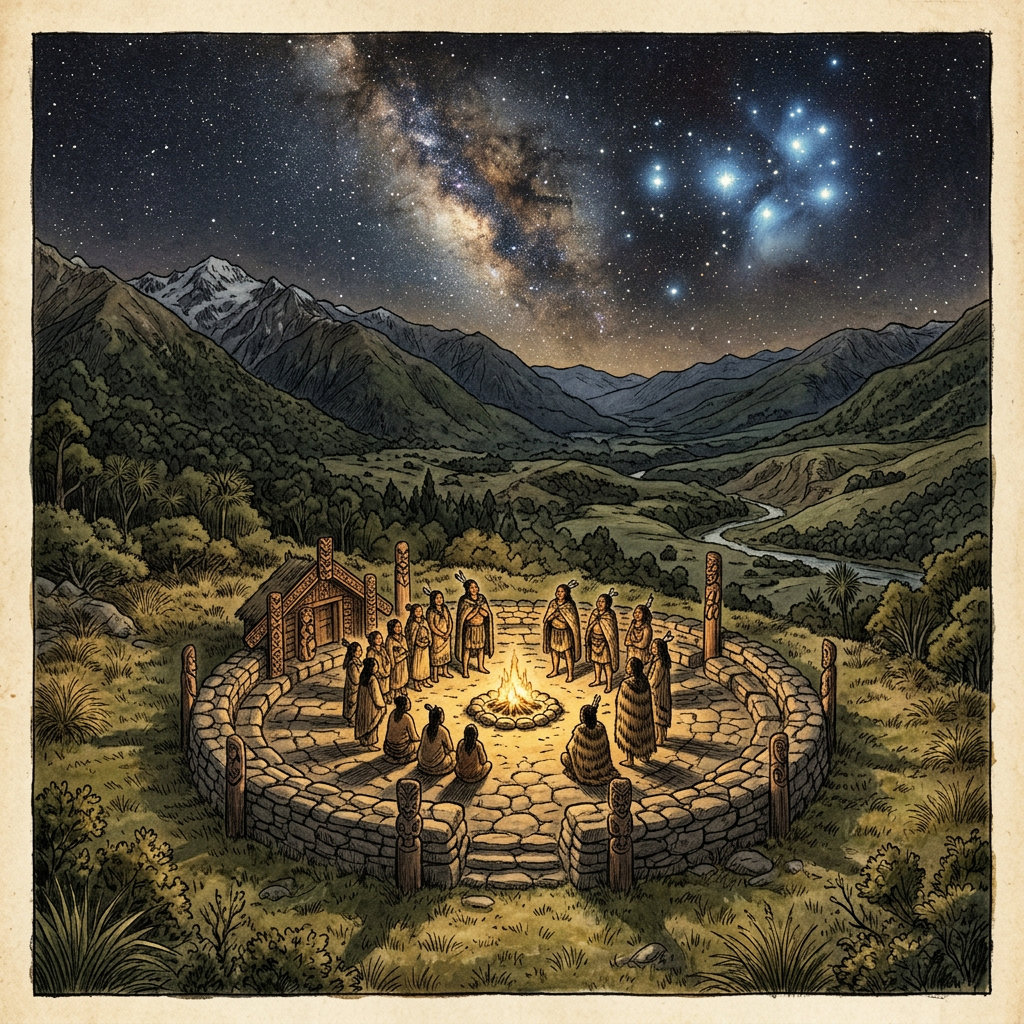
A team of researchers from the University of Otago has identified a series of elevated stone pavements and sighting markers in the Waitaki Valley that appear to be aligned with the rising of the Matariki star cluster (the Pleiades). These structures, dating to the 14th century, represent some of the earliest physical infrastructure dedicated to celestial observation in Aotearoa.
Local iwi (tribes) and archaeologists believe the site was used to precisely time the winter solstice and the start of the Māori New Year. The discovery of nearby hāngī (earth oven) pits filled with bird and fish bones indicates that these astronomical observations were accompanied by communal feasts, reinforcing the ancient roots of the modern Matariki festival as a time of both harvest and remembrance.