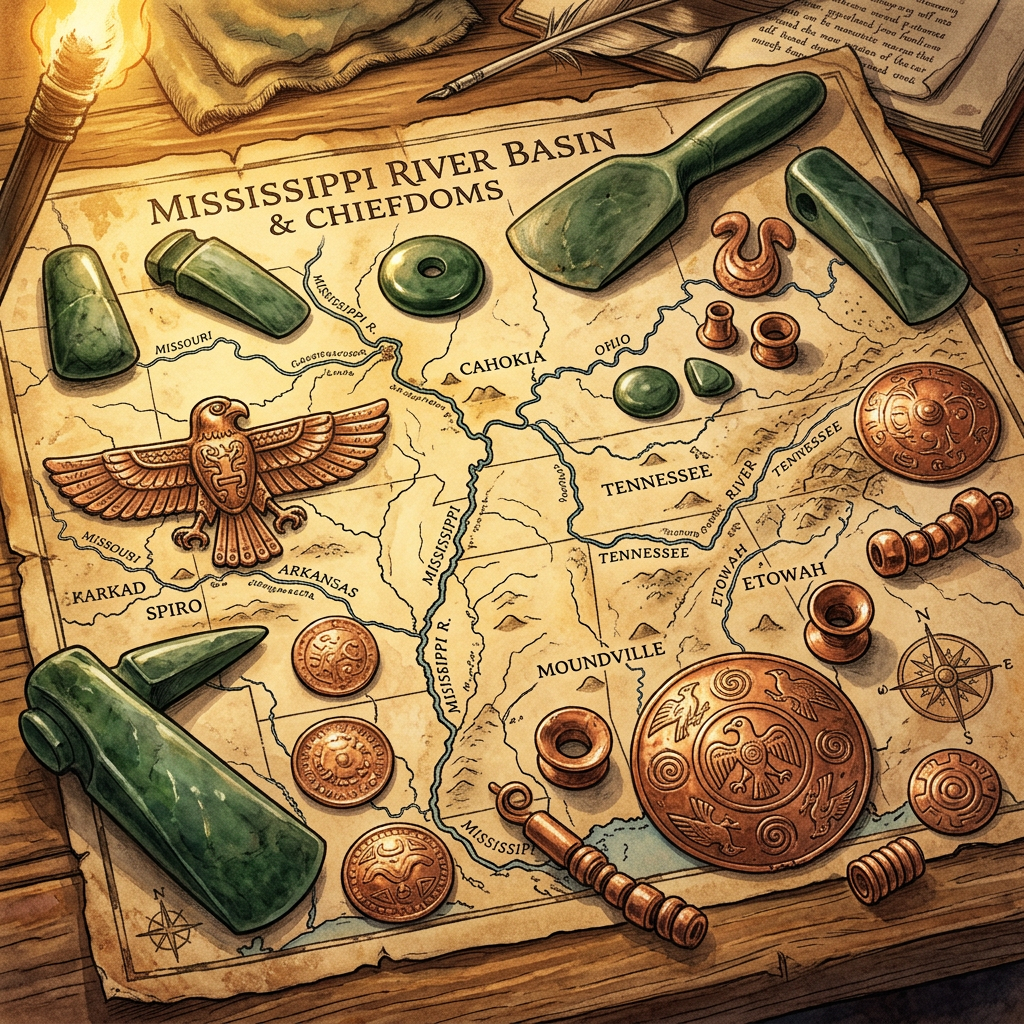
A new study using X-ray fluorescence (XRF) spectrometry has mapped a massive prehistoric trade circuit that spanned thousands of miles across North America. Researchers found that native copper from the Lake Superior region was systematically exchanged for marine-shell jadeite from the Gulf of Mexico as early as 500 BCE. This 'Jade and Copper' circuit reveals a level of socio-economic complexity among Woodland-period societies that was previously underestimated by historians.
The study traces how raw materials were transported along major river systems, with specific 'gateway' communities acting as processing and redistribution centers. The exchange of these high-value items was likely accompanied by the spread of shared religious iconography and burial practices. This discovery highlights the role of internal North American trade routes in the development of complex mound-building civilizations and the long-distance connectivity of the continent's ancient peoples.