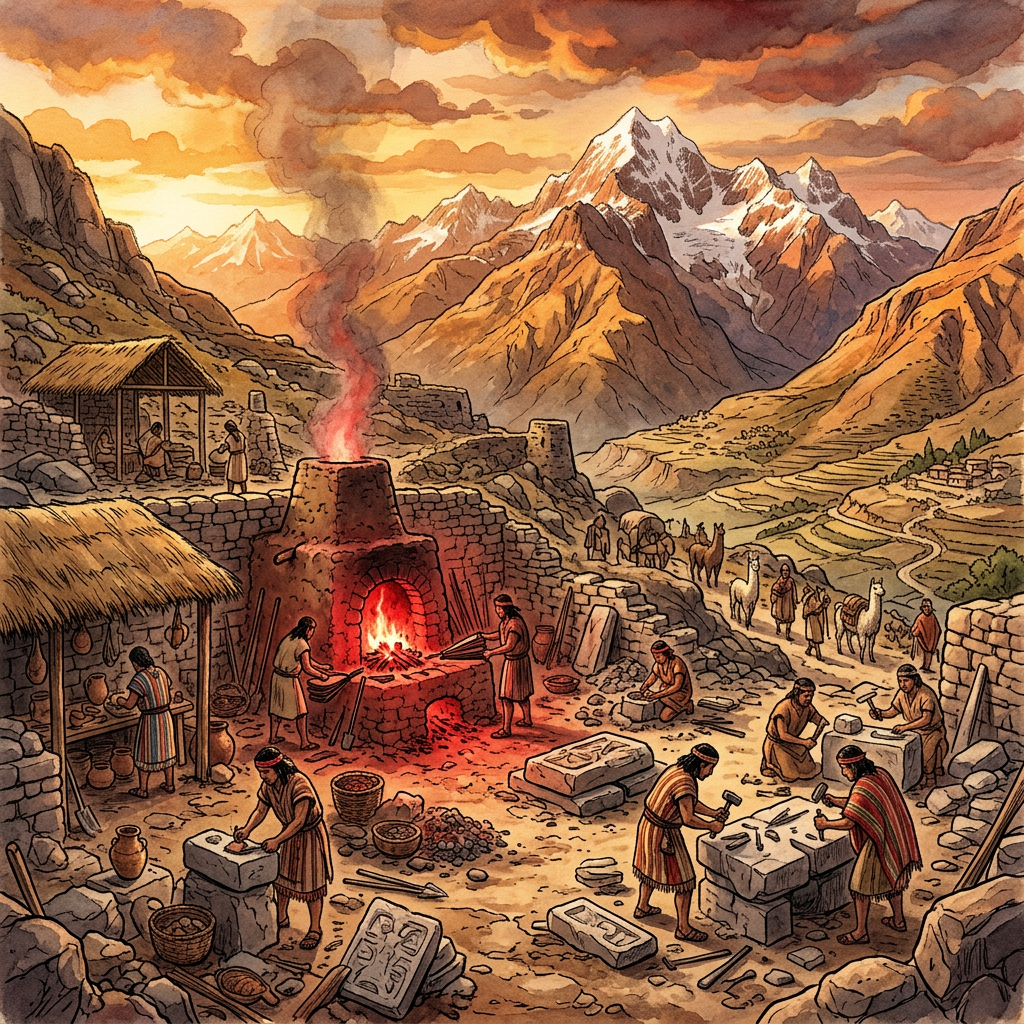
A breakthrough study published in Nature Geoscience has introduced a highly precise Mercury-Isotope fractionation technique to date the earliest evidence of cinnabar processing in the Central Andes. Researchers analyzed sediment cores and metallurgical remains, revealing that the systematic extraction of mercury-rich minerals began as early as 1500 BCE, several centuries earlier than previously estimated. This research provides a new lens into the complex chemical knowledge possessed by pre-Chavin societies in high-altitude Peru.
The study highlights how ancient artisans managed the toxic vapors associated with cinnabar heating, suggesting a sophisticated level of ancient chemical engineering. By tracking the isotopic signature of mercury pollutants in nearby lake beds, the team was able to correlate industrial peaks with specific cultural transitions, offering a new chronological framework for Andean heritage studies that bypasses the limitations of traditional radiocarbon dating in mineral-rich environments.