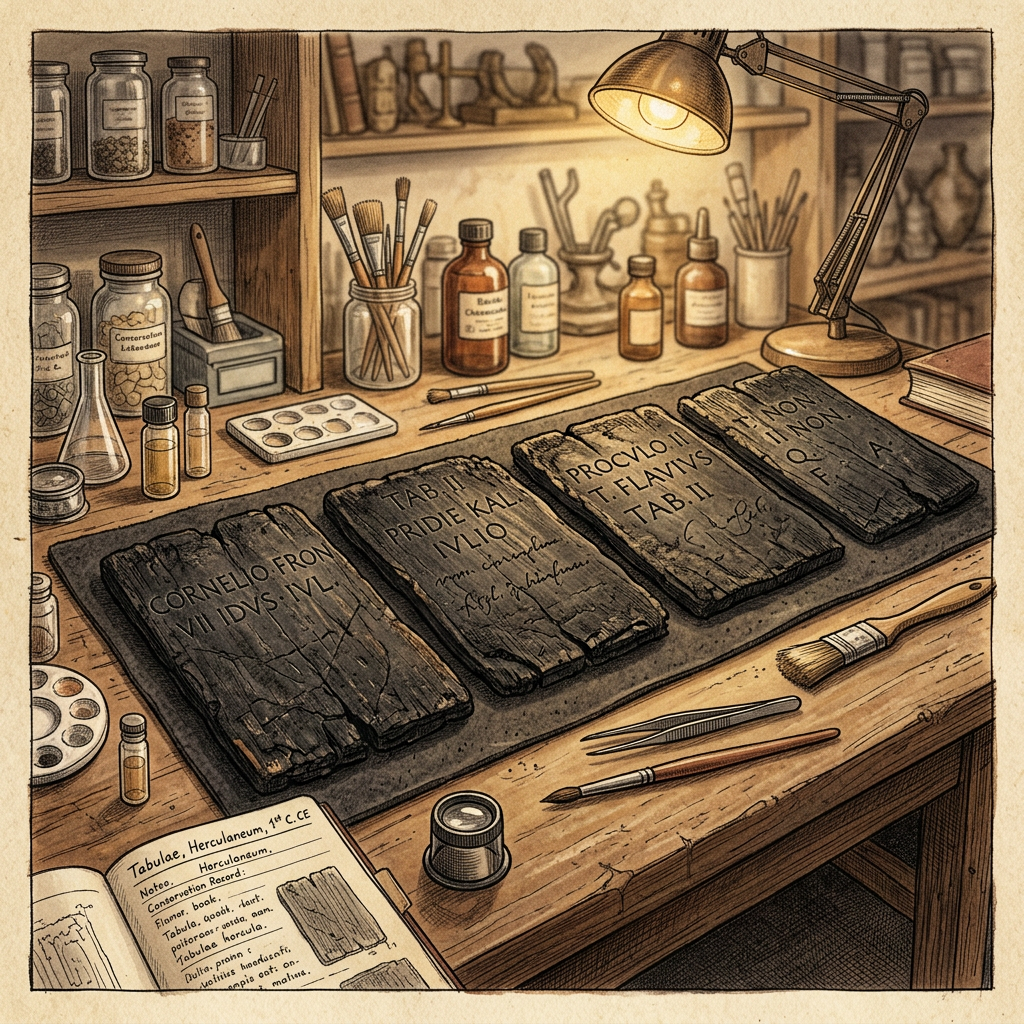
A new excavation near the ancient shoreline of Herculaneum has led to the discovery of a small, vaulted room that served as a Roman maritime customs archive. Inside, researchers found a chest containing dozens of carbonized wooden tablets, which have been preserved by the volcanic heat of the Vesuvius eruption in 79 CE. Using advanced X-ray phase-contrast tomography, the team has begun to read the text on these tablets.
The records detail shipping manifests, import taxes on North African grain, and private contracts for the transport of luxury goods from the Levant. This discovery provides a rare granular look at the logistics of Roman Mediterranean trade and the bureaucratic systems that managed the flow of goods into the Bay of Naples. The archive is considered one of the most significant finds of Latin epigraphy in recent decades.