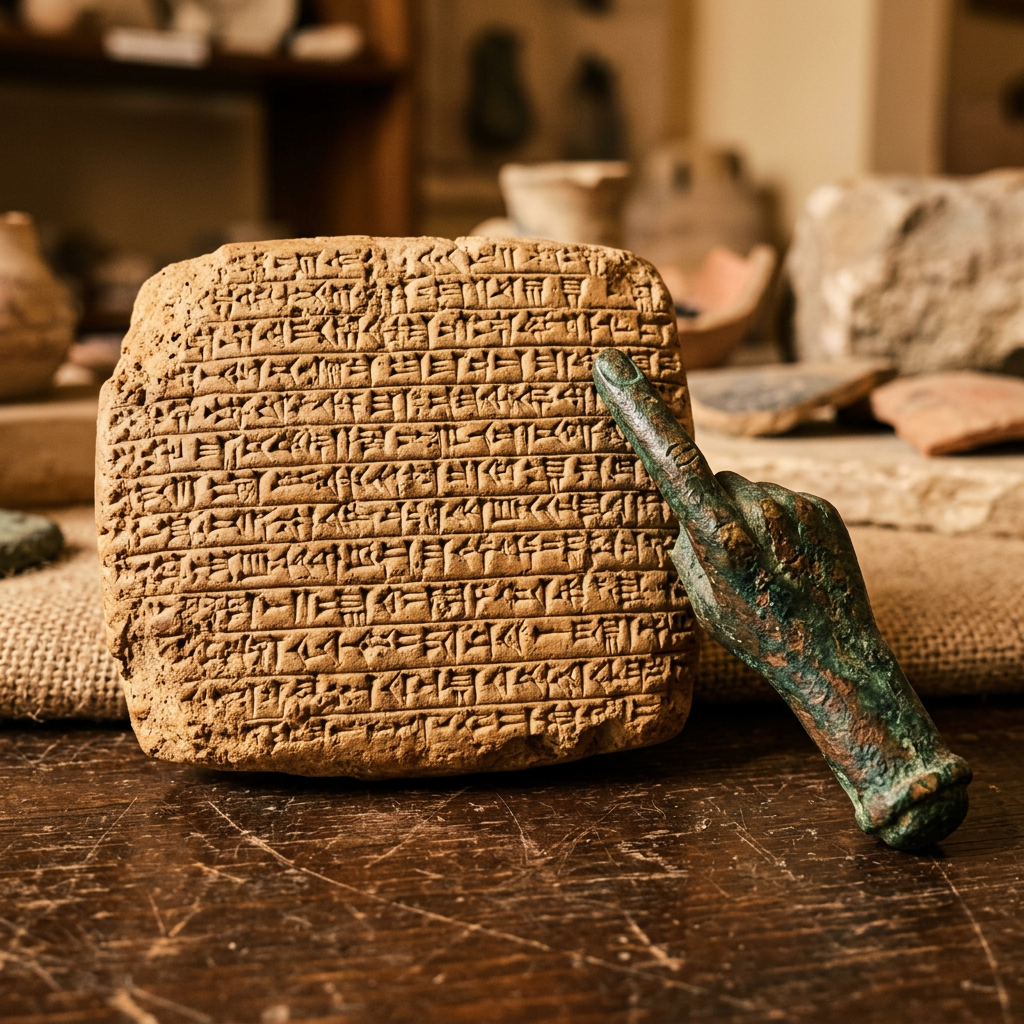
A cuneiform archive discovered in the temple precinct of the ancient city of Ur has revealed a collection of 4,000-year-old lunar eclipse predictions. The tablets contain detailed mathematical models used by Sumerian priests to anticipate celestial events, which were viewed as critical omens for the ruling dynasty.
Accompanying the tablets were several small bronze pointers and clay charts of the night sky. This discovery suggests that Sumerian astronomy was significantly more predictive and data-driven than previously recognized, serving as a direct precursor to later Babylonian and Greek celestial mathematics.