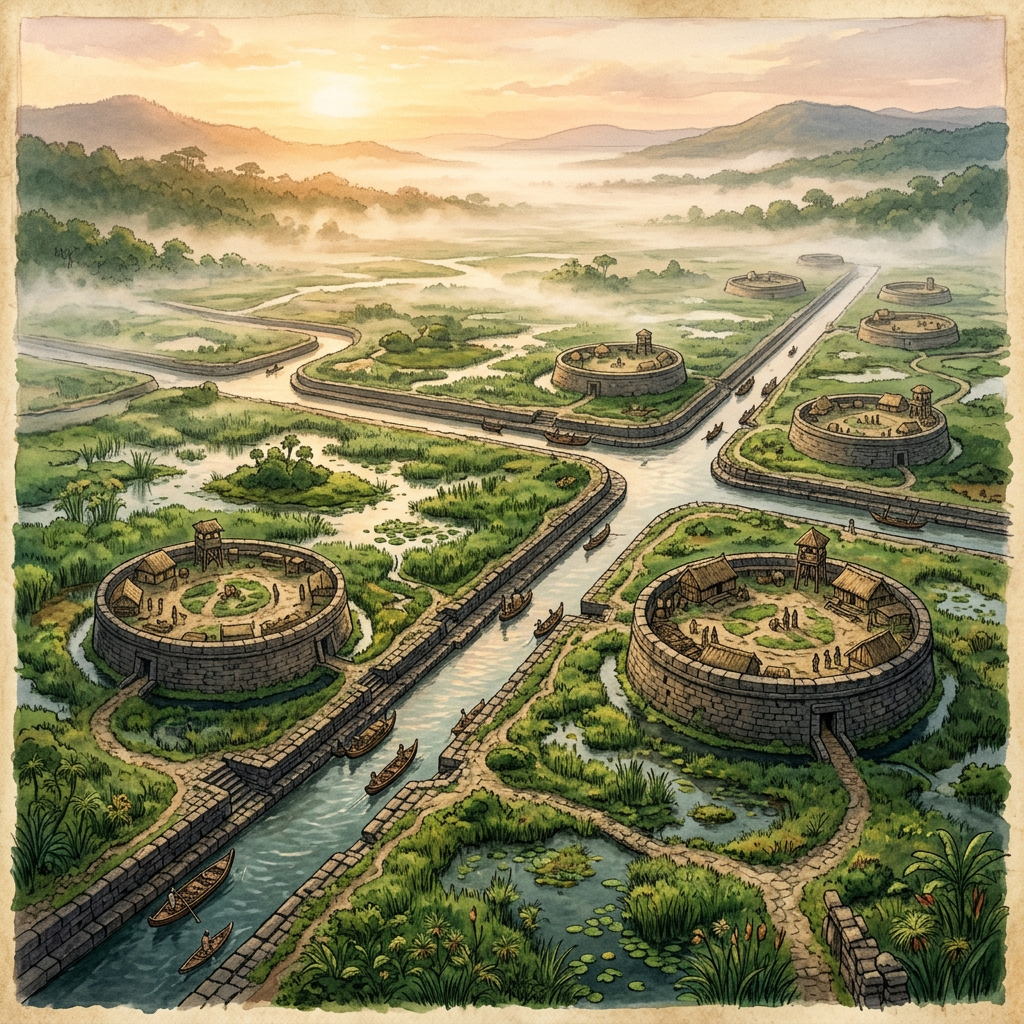
Archaeologists utilizing high-resolution LiDAR technology have identified the sprawling remains of a previously unknown urban network built atop artificial floating islands in the Mesopotamian marshes. Dating back to the 8th century, this aquatic metropolis features a complex system of raised platforms, interconnected by stone-lined canals that suggest a highly specialized society adapted to a changing riverine environment.
Initial surveys of the site, located in a remote sector of the Ahwar, have uncovered evidence of early industrial-scale reed processing and fish-drying facilities. Researchers believe this "Floating City" served as a strategic hub for trade between the Abbasid Caliphate and maritime merchants from the Persian Gulf, providing a unique look at ancient hydro-engineering and sustainable urbanism.