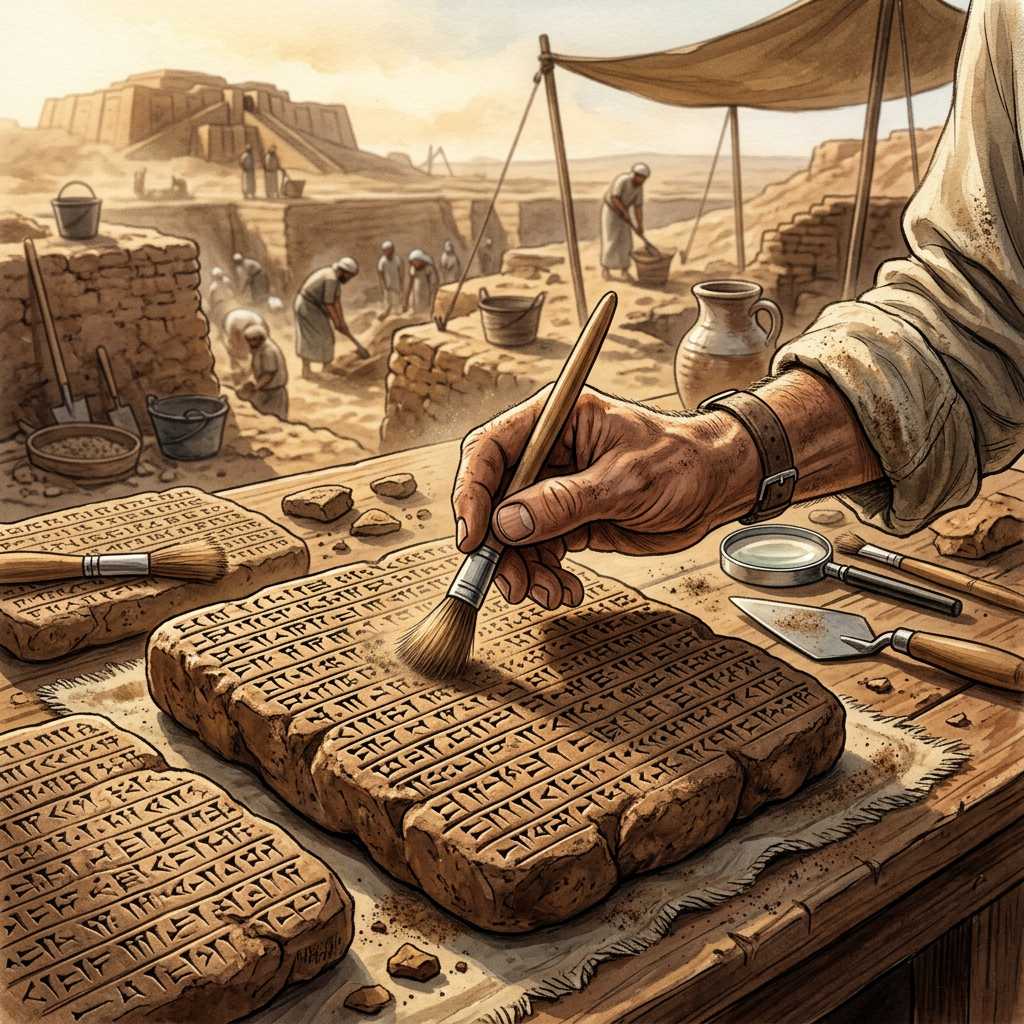
Excavations at a pre-Mauryan site in Haryana have yielded clay tablets inscribed with the Dharma-Anubhava, a collection of aphorisms detailing the philosophy of experiential ethics. Dating back to the 5th century BCE, these tablets suggest that early Vedic thinkers prioritized personal realization and 'lived virtue' over purely ritualistic compliance. The text challenges the notion that ancient morality was strictly dogmatic, presenting instead a framework for subjective ethical validation.
Archaeologists believe these tablets were part of a communal teaching center, as the surrounding artifacts indicate a space for public discourse. The Dharma-Anubhava emphasizes the role of Pratyaksha (perception) in determining righteous action, suggesting that truth must be witnessed in the results of one's deeds. This find provides crucial insights into the intellectual diversity of the Ghaggar-Hakra basin during a period of significant social transformation.