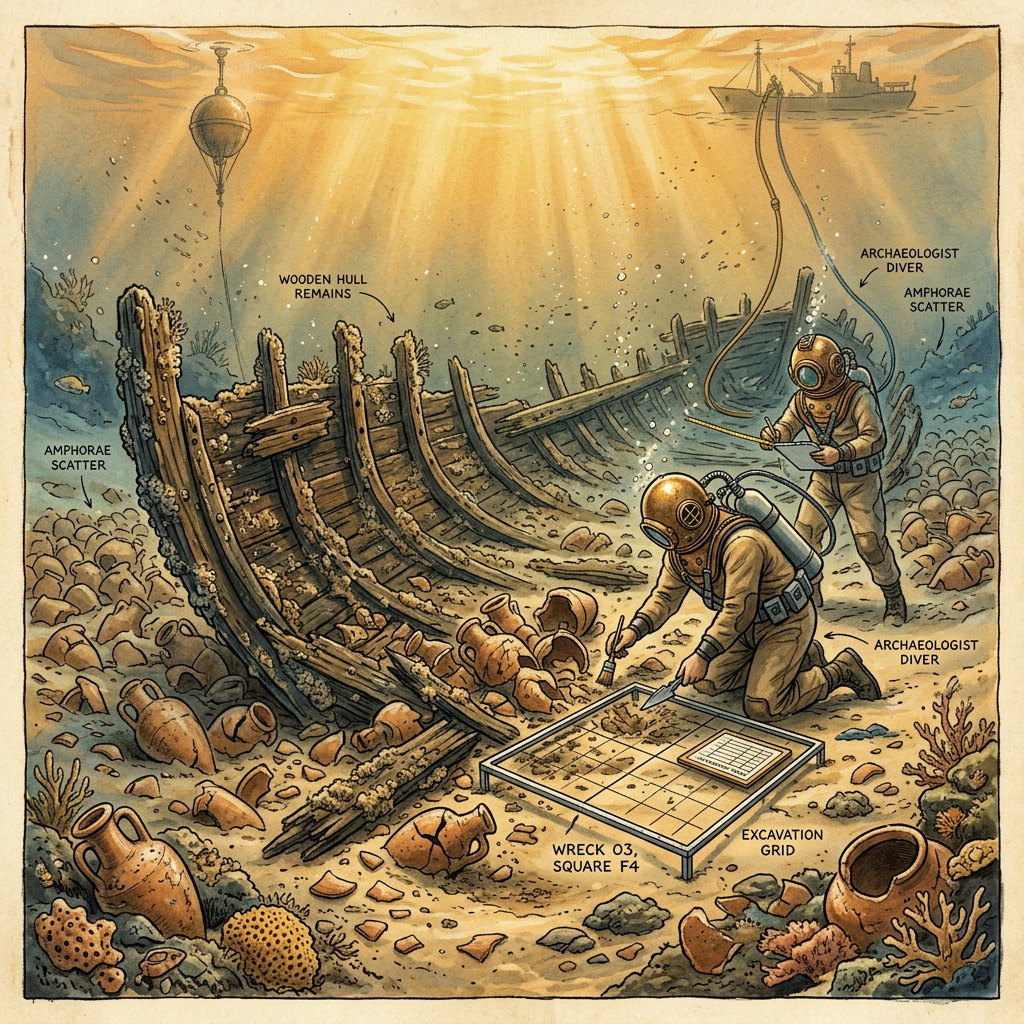
Archaeologists have identified a major maritime trade corridor dubbed the 'Papyrus and Cedar' Seaway, linking the Nile Delta to the ancient port of Byblos. New excavations of submerged harbor structures along the Levantine coast have yielded fragments of Egyptian pottery and papyrus scrolls alongside massive cedar logs. This discovery confirms that the maritime exchange of luxury goods and construction materials was far more systematic during the Old Kingdom than previously thought.
The research team utilized underwater sonar mapping to locate several shipwrecks along the route, which date back to approximately 2500 BCE. These vessels carried resins, oils, and the famous cedar of Lebanon, which was essential for Egyptian temple construction and ship-building. The findings provide a rare glimpse into the early logistics of Mediterranean trade and the geopolitical ties that bound these early civilizations through seafaring expertise.