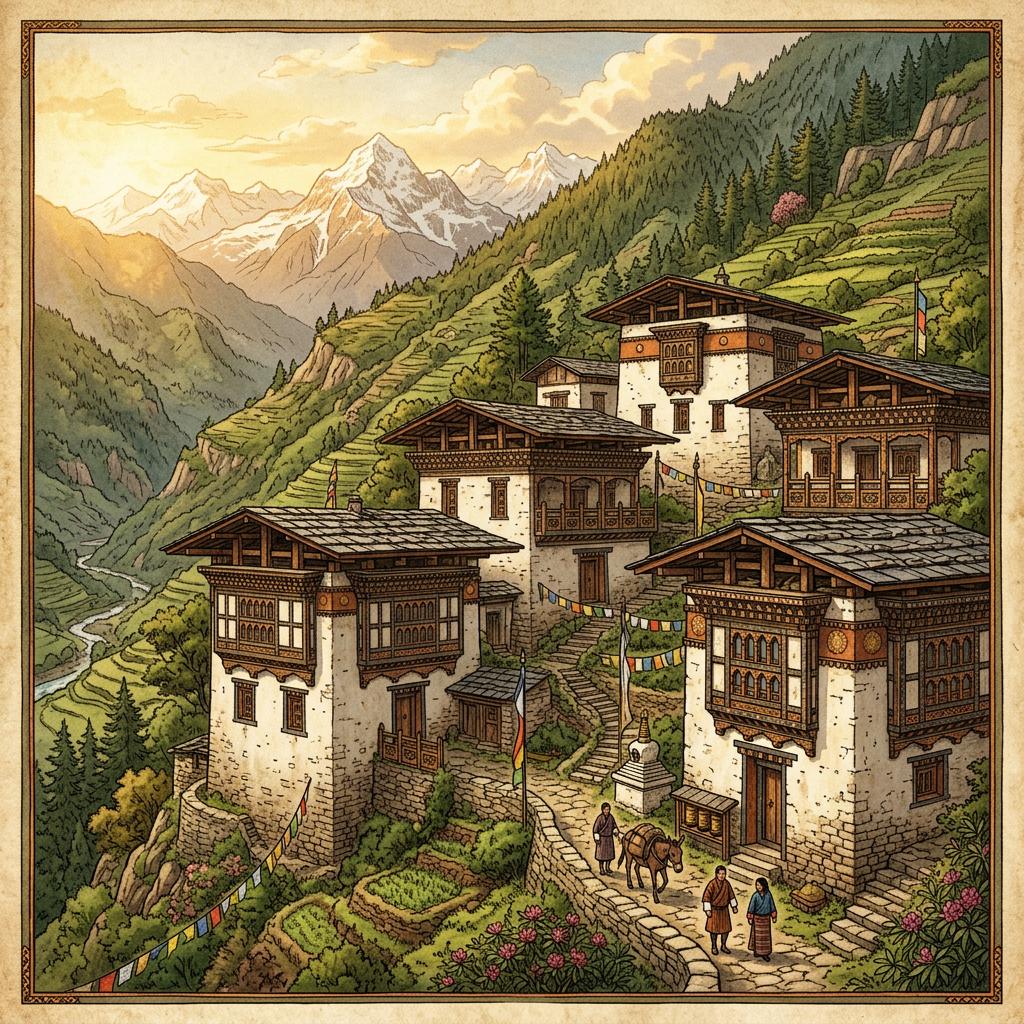
UNESCO has inscribed the traditional stone-and-timber architecture of the Bhutanese Himalayas as a World Heritage site, citing its exceptional vernacular engineering and cultural significance. The designation covers several remote villages where the construction techniques—utilizing dry-stone masonry and intricate wood carvings—have remained unchanged for centuries. These structures are built to withstand the extreme seismic activity and harsh weather conditions of the high-altitude environment.
The World Heritage Committee noted that these buildings represent a unique harmony between the natural landscape and the Buddhist spiritual traditions of the region. The inscription also includes the ancient irrigation systems and communal granaries that support these settlements. By granting this status, UNESCO aims to protect these sites from the pressures of modern development and ensure that the traditional craftsmanship is passed down to future generations of Bhutanese builders through dedicated training programs.