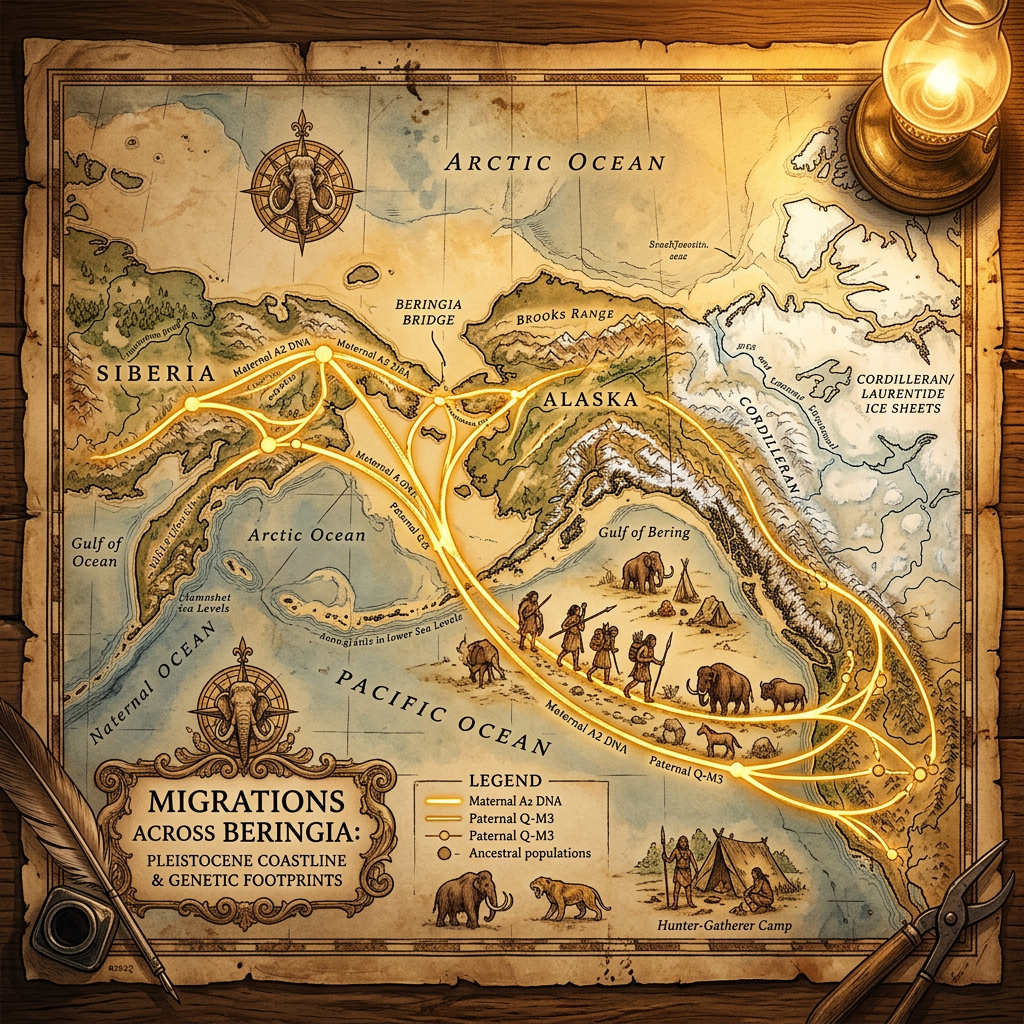
In a major breakthrough for paleogenomics, researchers have sequenced the DNA of 14,000-year-old "Solutrean Successor" remains from the Iberian Peninsula. The study, published in Paleobiology & Genomics Today, identifies a distinctive Pleistocene lineage that evolved specialized genetic adaptations for processing high-latitude marine fats and omega-3 fatty acids, similar to modern Arctic populations.
This genetic signature suggests that Late Paleolithic hunter-gatherers in Europe were highly specialized maritime foragers who relied on deep-sea resources during the final stages of the Last Glacial Maximum. The discovery challenges the "mammoth-steppes" model of human survival, proving that coastal ecosystems provided a critical refugium and drove significant evolutionary changes in human metabolism.