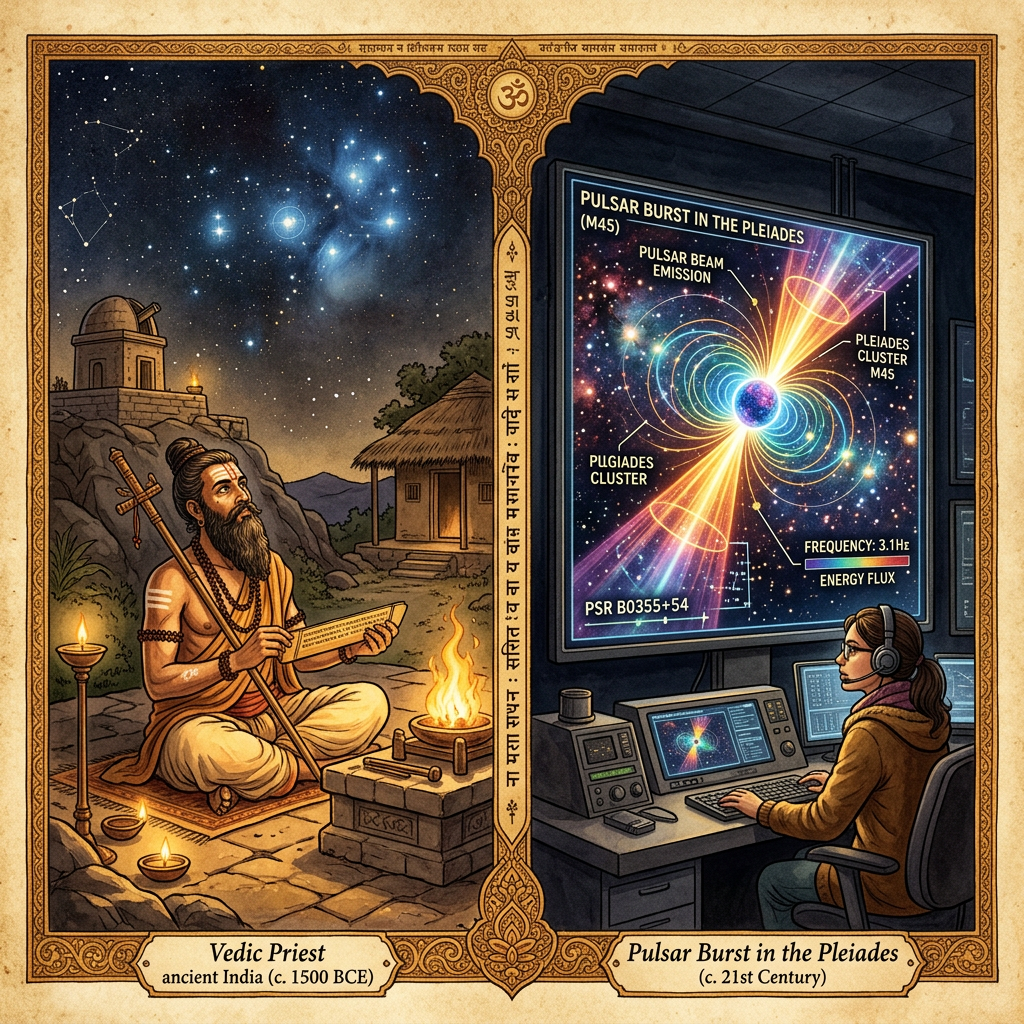
A collaborative study between physicists and Sanskrit scholars has identified a remarkable correlation between 3rd millennium BCE Atharvavedic ritual descriptions and a specific celestial event. Research published in the Archaeoastronomy & Vedic Science Review links descriptions of a "blinding star within the Krittika" to a rare pulsar-induced gamma-ray event that occurred in approximately 2700 BCE.
Using high-resolution astrophysical simulations, the team confirmed that a local high-energy transient would have been visible to the naked eye for several months. The ritual layers of the Atharvaveda record the precise timing and brightness of this event, providing a new astronomical anchor point for dating the late Vedic period and validating the observational rigor of ancient Indian sky-watchers.