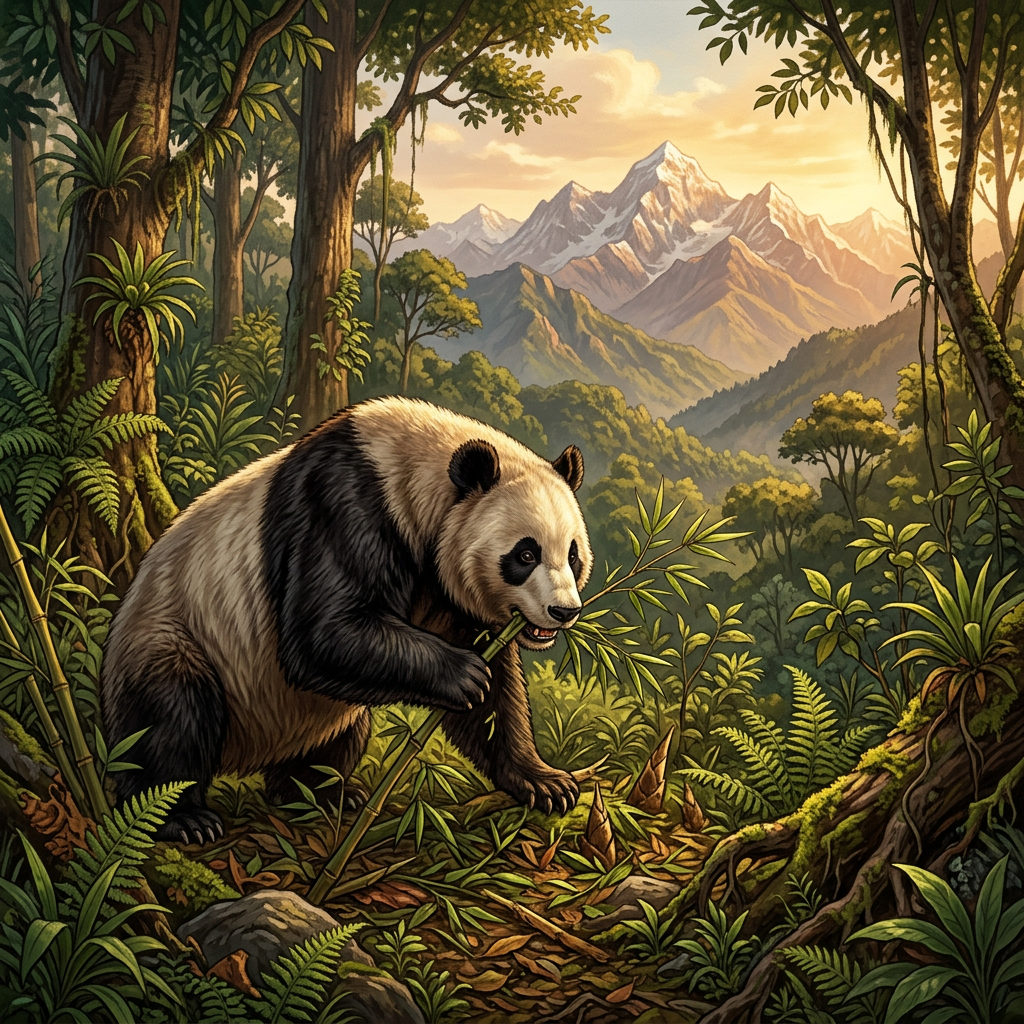
Palaeontologists working in the Shivalik Hills of Himachal Pradesh have announced the discovery of an exceptionally preserved jawbone and partial skeleton of a new ursid species. Named Indarctos himalayensis, the creature is being described as an Indian Proto-Panda, representing a vital link in the evolution of bear species that specialized in high-fiber vegetation. The fossil dates back to the early Miocene epoch, roughly 22 million years ago.
The dental analysis reveals specialized molars suited for grinding tough plant matter, suggesting that this species adapted to a diet of bamboo-like grasses long before the modern giant panda emerged in East Asia. This discovery shifts the geographic focus of early bear diversification, suggesting that the Indian subcontinent may have played a more prominent role in the evolutionary history of specialized herbivores during the cooling of the Miocene climate.