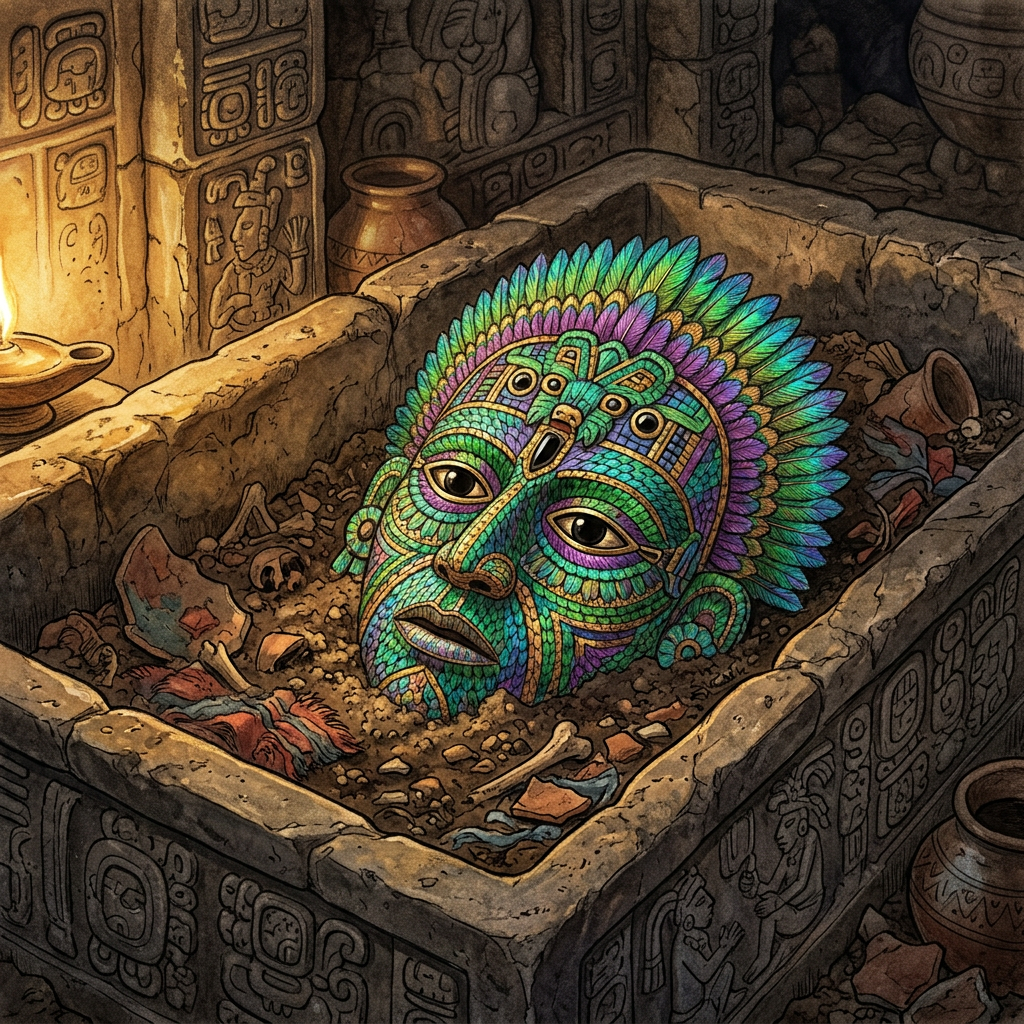
Excavations at the Zapotec site of Monte Albán have yielded a cache of hummingbird-feather mosaic masks, exceptionally preserved in a dry, sealed chamber. These masks, dating to the Late Classic period (600–900 CE), depict avian deities associated with the summer solstice. Experts believe these are the direct ancestors of the elaborate costumes seen in today's Guelaguetza festival in Oaxaca.
The discovery is significant because it highlights the inter-community exchange of the ancient world; the feathers were sourced from diverse tropical regions, reflecting the communal 'sharing' or 'offering' (the literal meaning of Guelaguetza) that define the modern event. This find provides a 1,500-year-old precedent for the vibrant, multi-ethnic celebrations that continue to thrive in southern Mexico.